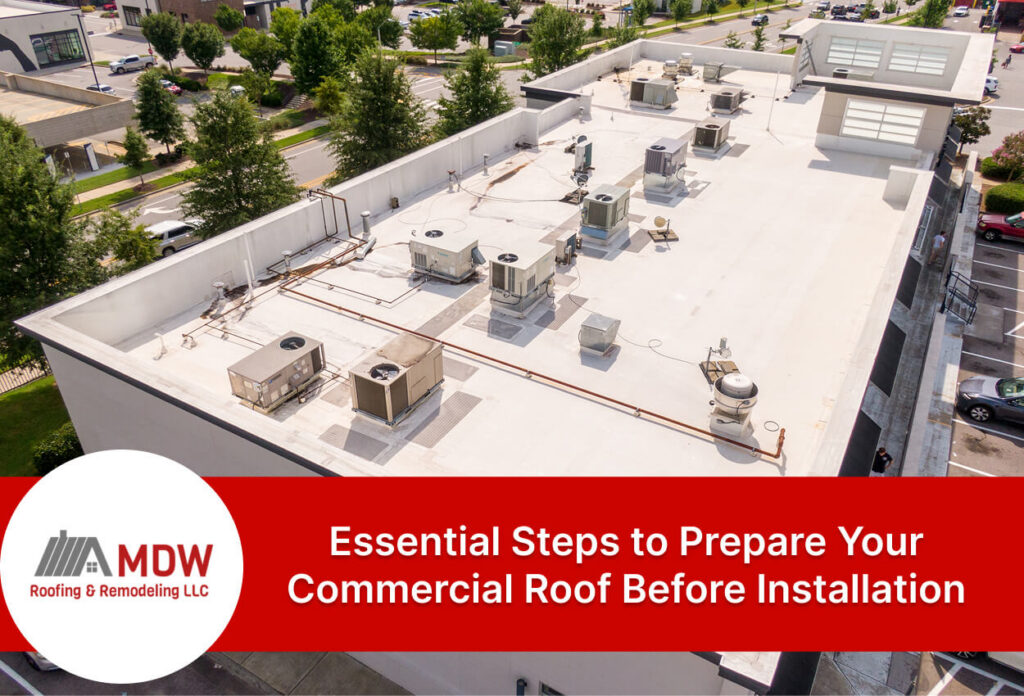
Essential Steps to Prepare Your Commercial Roof Before Installation
Key Points:
- Proper pre-installation commercial roof preparation is essential, involving thorough inspections and repairs to prevent future issues and ensure long-term system performance.
- Key steps include assessing the Roof Deck and deck for moisture or damage, along with professional cleaning to ensure the best surface adhesion.
- A building assessment and coordination with qualified professionals are important for seamless integration and project success.
Pre-installation commercial roof preparation serves as the foundation for a successful roofing project that delivers decades of reliable performance. Proper preparation prevents expensive future repairs, structural damage, and premature system failure that can devastate commercial operations. The process involves roof deck inspection and repair, thorough commercial surface of the roof cleaning, and detailed structural assessment to identify potential issues before they compromise the new installation.
Commercial roofing roof deck preparation requires careful attention to timing and weather conditions, as Houston’s climate presents unique challenges with high humidity, intense heat, and seasonal storms. Professional contractors must evaluate existing materials, assess structural integrity, and ensure roofing membrane installation readiness through systematic preparation protocols. These important steps establish the best foundation for long-term roofing system performance while minimizing the risk of warranty violations and installation delays that can impact business continuity.
Evaluating and Preparing the Roof Deck for Installation
Commercial roofing roof deck preparation begins with thorough assessment methods that determine the existing roof deck’s suitability for new membrane installation. Professional contractors utilize moisture meters and infrared scanning to detect leaks within the roof deck, while structural integrity verification involves checking for sagging, deterioration, or inadequate fastening systems. These roof deck inspection and repair procedures identify compromised areas that require immediate attention before roofing membrane installation readiness can be achieved.
Addressing roof deck deficiencies involves multiple specialized techniques depending on the identified issues. Uneven surfaces require grinding, patching, or overlay installation to create the smooth foundation necessary for proper membrane adhesion. Inadequate insulation attachment points must be reinforced or replaced to meet current building codes and wind uplift requirements. Commercial surface of the roof cleaning removes debris, oils, and contaminants that could interfere with adhesive bonding. Structure assessment extends beyond the roof deck to examine parapets, gaps, and edge details that affect overall system performance and longevity.
Thorough Roof Deck Inspection and Necessary Repairs
Roof deck inspections and repairs form the foundation of pre-installation commercial roof preparation. Professional contractors examine deck materials for common structural deficiencies, including fastener pull-out, rotted plywood sections, and corroded metal roof decking that can compromise the materials. Moisture damage detection requires a close look at the roof deck’s surface for soft spots, delamination, and warping, which are signs of leaks requiring immediate remediation.
Professional repair strategies focus on restoring deck stability and ensuring proper load distribution for new roofing materials. Loose fasteners receive replacement with appropriately sized screws or bolts that fasten to the structure. Deteriorated roof decking sections require complete removal and replacement with materials matching existing specifications and building codes. Commercial roofing roof deck preparation includes reinforcing weak areas with additional structural support to handle anticipated loads from new membrane systems, insulation, and equipment installations.
Proper deck preparation creates the stable foundation essential for roofing membrane installation readiness. Structure assessment during this phase identifies structural inconsistencies that could cause premature membrane failure or warranty voiding. These systematic repair protocols ensure the deck provides adequate support and smooth surfaces necessary for the best possible adhesion and long-term system performance.
Professional Surface Cleaning and Debris Removal Protocols
Industrial-grade cleaning methods ensure the best commercial surface of the roof cleaning that removes contaminants affecting membrane adhesion and long-term system performance. Professional contractors utilize specialized equipment, including power washers, industrial vacuums, and chemical degreasers, to eliminate oil residues, dirt accumulation, and biological growth that can compromise roofing membrane installation readiness. These thorough cleaning protocols target specific contaminants, including ponded water deposits, HVAC equipment residues, and organic matter that interfere with proper adhesive bonding.
Safety procedures during commercial roofing roof deck preparation require planning to protect building occupants and workers throughout the cleaning process. Professional teams coordinate with building management to schedule cleaning activities during low-occupancy periods, establish proper ventilation protocols, and implement containment measures that prevent debris or cleaning agents from entering occupied spaces. Personal protective equipment requirements include respiratory protection, non-slip footwear, and fall protection systems that ensure worker safety during intensive surface preparation activities.
Structure assessment continues during the cleaning phase as contractors identify previously hidden damage or deterioration revealed after debris removal. This systematic approach to pre-installation commercial roof preparation ensures all surface contaminants are eliminated before membrane installation begins, creating the best possible conditions for adhesive performance and system longevity.
Structural Assessment and Integration Planning
Structure assessment requires systematic evaluation of gaps, HVAC equipment connections, and perimeter details that directly impact successful roofing membrane installation readiness. Professional contractors examine existing equipment curbs, vents, and drain connections to identify compatibility issues with planned roofing systems. These assessments reveal improper flashing conditions, inadequate sealing, or outdated equipment mountings that could compromise the new membrane’s performance and create future leak points requiring expensive repairs.
Coordination with building systems ensures seamless integration during commercial roofing and roof deck preparation, and prevents installation conflicts that can delay project completion. Electrical conduit routing, plumbing vent positioning, and HVAC equipment placement must align with membrane installation requirements and manufacturer specifications. Professional contractors work closely with mechanical engineers and facility managers to schedule equipment modifications, relocate problematic gaps, and upgrade mounting systems that support both current needs and future maintenance access.
Pre-installation commercial roof preparation includes developing detailed integration plans that address timing coordination between roofing crews and other trades. These protocols ensure proper sequencing of membrane installation around building systems while maintaining operational requirements. Commercial surface of the roof cleaning extends to equipment areas and gaps, creating the best conditions for flashing installation and system connections that provide long-term weatherproofing performance.
Getting Ready for a Roof Membrane Installation
Final quality control checks represent the last important step in pre-installation commercial roof preparation before membrane installation begins. Professional contractors conduct surface dryness verification using moisture meters and infrared technology to confirm the roof deck meets manufacturer specifications for moisture content. Environmental condition monitoring includes temperature measurements, humidity levels, and wind speed assessments that determine suitable installation windows for the best possible adhesive performance and curing.
Material staging strategies require careful coordination to ensure roofing membrane installation readiness while protecting materials from weather exposure and contamination. Commercial roofing roof deck preparation concludes with systematic material placement that provides efficient access without compromising completed preparation work. Professional crews implement staging protocols that position materials strategically around the roof perimeter, creating clear work zones that facilitate smooth installation progression while maintaining safety requirements.
Crew coordination establishes clear communication protocols and task assignments that streamline the transition from preparation to installation phases. Stru assessment results guide final material selections and installation sequence decisions that get the most out of productivity. These protocols ensure all preparation investments translate into successful membrane installation with minimal delays or quality compromises that could affect long-term system performance.
Working with Professional Roofing Contractors for Preparation Success
Selecting qualified roofing contractors with proper certifications ensures successful pre-installation commercial roof preparation that meets industry standards and manufacturer requirements. Essential qualifications include state licensing, manufacturer certifications for specific membrane systems, and OSHA safety training that demonstrates competency in commercial roofing roof deck preparation. Contractors should provide documentation of completed similar projects and insurance coverage, including general liability and workers’ compensation.
Professional certifications from organizations like the National Roofing Contractors Association and specific membrane manufacturers validate expertise in roof deck inspection and repair techniques. These credentials demonstrate proficiency in Structure assessment procedures and commercial surface of the roof cleaning protocols essential for achieving roofing membrane installation readiness. Verified experience with similar building types and roofing systems provides additional assurance of technical competency.
Establishing clear communication protocols protects your investment throughout the preparation process by documenting all findings, repair requirements, and material specifications. Professional contractors provide detailed written assessments of roof deck conditions, photographic documentation of identified issues, and preparation plans that outline specific steps and timelines. Regular progress reports and change order procedures ensure transparency while maintaining project budget control and quality standards throughout the pre-installation commercial roof preparation phase.
Trust MDW Roofing & Remodeling LLC for Expert Pre-Installation Commercial Roof Preparation
Ensuring your commercial roof is adequately prepared before installation is important for long-term durability and performance. At MDW Roofing & Remodeling LLC, we specialize in pre-installation commercial roof preparation. Our expert team conducts thorough evaluations and repairs of Roof Decks and decks, ensuring every inch of your roof is ready for a new installation.
Don’t compromise on the safety and efficiency of your commercial roofing project. Choose MDW Roofing & Remodeling LLC to handle the intricate details of roof preparation. Contact us today at (832) 766-9994 to schedule a consultation and ensure your roof is in capable hands.