
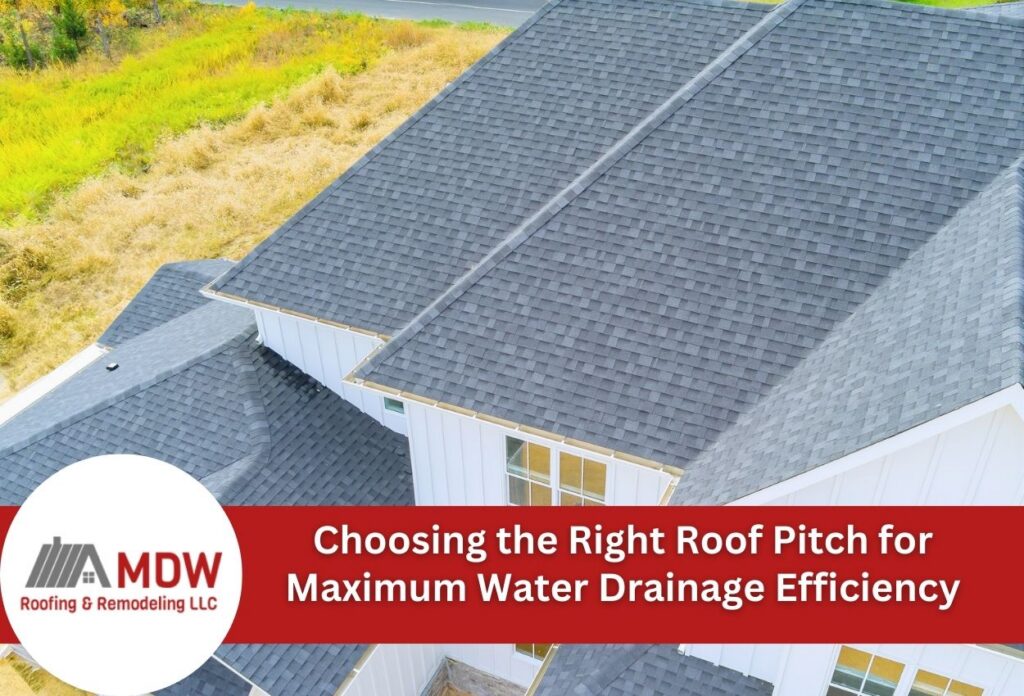

The best possible roof pitch for water drainage typically ranges from 4:12 to 12:12, with steeper slopes providing superior water shedding capabilities. A roof’s angle directly determines how quickly rainwater moves off the surface, preventing pooling and potential structural damage. Minimum roof pitch requirements vary by roofing material, but most building codes specify at least a 2:12 slope for effective water runoff.
Steep roof advantages for drainage become evident during heavy rainfall, where proper roof grade rain protection prevents water from backing up under shingles or overwhelming gutters. The roof angle water shedding relationship is particularly important in areas prone to intense storms, where an inadequate slope can lead to expensive leak problems.
Understanding roof slope for water runoff helps property owners make informed decisions about new construction or roof replacement projects. The physics behind water movement across roofing surfaces reveals why pitch selection significantly impacts long-term performance and maintenance requirements.
Minimum Pitch Requirements for Different Roofing Materials
Building codes establish specific minimum roof pitch requirements based on roofing material type to ensure proper water runoff. Asphalt shingles require a minimum 2:12 slope, while 3-tab shingles need at least 4:12 for the best roof angle water shedding. Metal roofing systems can function effectively at lower slopes, often performing well at a 1:12 pitch when properly sealed.
Clay and concrete tiles require steeper installations, typically requiring a minimum roof pitch of 4:12 or greater due to their overlapping design. The roof slope for water runoff directly correlates with material porosity and installation methods. Dense materials like slate need a sufficient angle to prevent leaks between joints.
Steep roof advantages, drainage becomes apparent when comparing material performance across different slopes. Proper roof grade rain protection depends on matching pitch specifications to material capabilities. Membrane roofing systems designed for low-slope applications still require adequate drainage to prevent ponding, while traditional shingle systems rely on gravity-driven water movement that increases effectiveness with steeper angles.
The Science Behind Water Flow and Roof Angles
Gravity serves as the primary force driving water movement across the surface of the roof, with the roof slope for water runoff determining drainage efficiency. When rainwater hits a roof, gravitational pull creates momentum that increases with steeper angles. Physics principles demonstrate that water velocity doubles when the roof pitch increases from 4:12 to 8:12, significantly improving the roof angle’s water shedding capabilities.
Surface texture plays an important role in water movement patterns, with smooth materials allowing faster runoff compared to textured surfaces that create friction. Weather intensity affects drainage performance as heavy rainfall can overwhelm minimum roof pitch requirements, making steep roofs more apparent during severe storms. Proper roof grade rain protection becomes essential when wind-driven rain challenges the gravitational flow patterns.
Environmental factors specific to Gulf Coast climates create unique drainage challenges where sudden downpours test roofing systems. Temperature variations cause expansion and contraction that can affect water flow paths, while humidity levels influence evaporation rates on roofing surfaces. Understanding these scientific principles helps explain why certain roof pitch angles perform better under specific weather conditions and material combinations.
Steep vs. Low-Pitch Roofs for Drainage Efficiency
Steeper roof angles provide significant advantages for rapid water removal by creating faster runoff velocities that prevent pooling and moisture accumulation. When the roof slope for water runoff exceeds a 6:12 pitch, water moves quickly enough to carry debris. Steep roof advantages include reduced risk of wind-driven rain and improved performance during intense weather.
Low-pitch roofs create slower water movement that can allow debris accumulation in valleys and around gaps, potentially blocking drainage paths. The minimum roof pitch requirements exist because an inadequate slope allows water to sit longer on surfaces, increasing leak risks through overlapping joints. Proper roof grade rain protection requires a sufficient angle to overcome surface tension and material resistance.
Trade-offs exist between the best possible drainage performance and other structural considerations. While steeper roofs excel at roof angle water shedding, they face increased wind uplift forces and require stronger structural support systems. Accessibility becomes more challenging for maintenance on steep surfaces, though the improved drainage often reduces long-term maintenance needs. Balancing these factors helps determine the most effective pitch for specific applications and local climate conditions.
Climate Considerations for Houston Area Roof Pitch Selection
Southeast Texas presents unique challenges for roof pitch selection due to intense rainfall patterns and hurricane-force winds that test drainage systems beyond typical weather conditions. The region experiences some of the highest annual precipitation rates in the United States, with sudden downpours capable of overwhelming inadequate roof slopes for water runoff designs. Minimum roof pitch requirements take on greater importance when properties face potential flooding from both ground-level and rooftop water accumulation.
Hurricane season brings extreme weather that requires superior roof angle water shedding capabilities to prevent catastrophic water intrusion. Wind-driven rain during tropical storms can push water upward against gravity, making steeproofs vulnerable tos drainage essential for preventing leaks through overlapping materials. The combination of high humidity and frequent storms creates conditions where proper roof-grade rain protection becomes important for long-term structural integrity.
Regional building practices have evolved to address these climate realities, with many contractors recommending steeper pitches than minimum code requirements to handle extreme rainfall. The Gulf Coast’s flat topography means properties cannot rely on natural ground drainage, placing additional emphasis on effective rooftop water management systems.
Common Drainage Problems Caused by Improper Pitch
Inadequate roof slope for water runoff creates visible warning signs that property owners can identify before serious structural damage occurs. Water stains on ceilings and walls often indicate insufficient roof angle water shedding, allowing moisture to leak through roofing materials. Gutter overflow during moderate rainfall signals that water cannot move efficiently off the surface of the roof due to improper pitch, overwhelming the collection system despite adequate gutter capacity.
Premature deterioration of roofing materials frequently results from poor drainage design, where minimum roof pitch requirements have not been met. Granule loss on asphalt shingles accelerates when water pools instead of flowing quickly off surfaces. Metal roofing develops rust spots and fastener failures when an inadequate slope prevents proper roof grade rain protection, allowing standing water to exploit vulnerable connection points.
Long-term consequences of insufficient pitch extend beyond surface damage to create expensive structural complications. Foundation problems develop when inadequate drainage overwhelms soil capacity around building perimeters. Mold growth within wall cavities and attic spaces becomes inevitable when moisture consistently leaks through compromised roofing systems. These steep roof advantages in drainage become apparent when comparing maintenance costs between properly pitched installations and inadequate slope configurations that require frequent repairs and premature replacement.
Professional Assessment and Implementation Guidelines
Determining the best roof pitch for water drainage requires professional evaluation of multiple property-specific factors that affect long-term performance. Roofing contractors assess existing structural capacity, local building codes, and site drainage patterns to recommend appropriate roof slopes for water runoff solutions. Professional evaluation includes analyzing soil conditions, foundation stability, and neighboring structures that influence water flow patterns around the property.
Experienced contractors use specialized tools to measure current pitch angles and calculate required structural modifications for achieving proper roof grade rain protection. The assessment process examines existing framing capacity to support steeper configurations, identifies necessary reinforcement requirements, and evaluates how pitch changes affect overall building proportions. Professional analysis ensures that steep roof advantages, drainage can be achieved without compromising structural integrity or exceeding local height restrictions.
Implementation of pitch modifications involves coordinating permit applications, structural engineering consultations, and integration with existing drainage infrastructure. Contractors must address how roof angle water shedding changes affect gutter placement, downspout capacity, and foundation drainage systems. Professional oversight ensures that minimum roof pitch requirements are exceeded appropriately while managing construction complexity and maintaining building code compliance throughout the modification process.
The Best Roof Pitch for Superior Water Drainage Performance
Choosing the right roof pitch is important for effective water management, especially in areas like Houston, where weather can pose significant threats to your property. MDW Roofing & Remodeling LLC specializes in assessing and implementing the ideal roof slope to enhance water drainage and protect your home from water-related damage. Understanding the dynamics of roof pitch and local climate conditions allows us to offer solutions that not only prevent leaks but also extend the lifespan of your roof.
Call MDW Roofing & Remodeling LLC today at (832) 766-9994 to ensure your roof is optimized for peak performance in all weather conditions.