
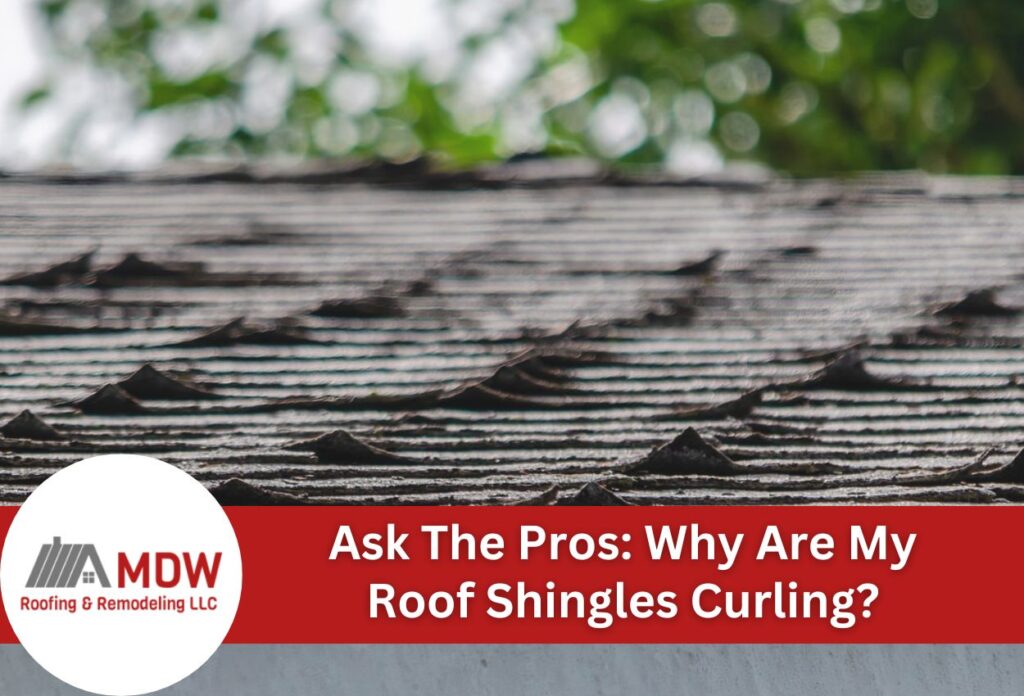

If you have a shingle roof, you may have experienced seeing some shingles with edges or corners lifted up from the roof. This is shingle curling, a common roofing problem that develops when shingles lose their ability to lay flat against the roof deck, often appearing as upward-curling edges or entire shingles that appear warped and distorted.
Several factors contribute to curled roof shingles, including normal aging, moisture infiltration, poor attic ventilation, and extreme temperature fluctuations. The causes of curled roof shingles range from manufacturing defects to improper installation, with older roofs being particularly susceptible to this type of deterioration.
Recognizing the signs of shingle damage early is crucial because curled shingles create vulnerable points where water can enter your roof. These damaged areas allow moisture to reach the underlying roof deck and potentially cause structural damage, mold growth, and interior water damage. Understanding why roof shingles curl helps homeowners identify when professional inspection and shingle repair are necessary to maintain their roof’s integrity.
Heat and Age: The Leading Causes of Shingle Distortion
Excessive attic heat is one of the most damaging conditions for asphalt shingles, causing the materials to expand and contract repeatedly throughout daily temperature cycles. Poor attic ventilation traps hot air beneath the roof deck, creating temperatures that can exceed 150 degrees Fahrenheit during the summer in some cases. This intense heat makes shingle materials more pliable and prone to warping, with the edges gradually lifting upward as the asphalt loses its structural integrity.
The natural aging process accelerates roof shingle buckling problems as weathering breaks down the petroleum-based compounds that keep shingles flexible yet stable. Over time, UV rays from the sun cause the asphalt to become brittle and shrink, while the granule surface begins to deteriorate. This combination of heat exposure and material degradation explains why preventing shingle curling requires adequate ventilation and regular roof maintenance to extend the lifespan of roofing materials.
Moisture Problems That Warp Your Roofing Materials
Trapped moisture within the roofing system caused by having inadequate ventilation creates destructive expansion and contraction cycles that bend shingles out of their original shape. Warm, humid air that becomes trapped in the attic space presses up on the roof deck, warming it and causing roofing materials to swell during humid periods and shrink when conditions dry out. These repeated moisture cycles weaken the shingle, causing edges to curl upward and create the wavy appearance along roofs that have this problem.
Humidity and condensation buildup accelerate shingle damage as well by breaking down the adhesive strips that bond shingles to the roof surface. As moisture enters the shingle layers, it compromises the integrity of the asphalt compounds, making them more susceptible to warping and distortion. The constant presence of moisture also promotes granule loss, which reduces the shingle’s ability to protect against further water infiltration.
Understanding these moisture-related causes of curled roof shingles helps identify why proper attic ventilation becomes essential for preventing premature shingle failure. Addressing ventilation issues early represents the most effective approach for preventing shingle curling and avoiding expensive repair projects that result from prolonged moisture exposure.
Installation Issues That Lead to Future Buckling
Poor nailing techniques create stress on the shingles that eventually cause them to lift and curl around fastener points. When roofers drive nails too deep, they puncture through the shingle material and create weak spots where moisture can enter. Along the same lines, nails placed too high or too shallow fail to properly secure the shingles, allowing wind to gradually work beneath the edges and cause progressive lifting that leads to roof shingle buckling.
Shingles installed with improper overlap or misaligned rows develop pressure points that increase the damaging impact of expansion and contraction forces. These stress concentrations accelerate the curling process, particularly along shingle edges where the material becomes most vulnerable to warping.
Substandard materials and rushed installation work create long-term performance issues that show itself as premature curling and lifting. Low-quality shingles lack the durability needed to withstand normal thermal cycling, while hurried installation often results in inadequate sealing and improper fastening patterns. These installation shortcuts become the underlying causes of curled roof shingles that require extensive curling asphalt shingle repair within just a few years of installation.
Recognizing When Curled Shingles Need Professional Attention
Homeowners can assess the severity of shingle curling by conducting visual inspections from the ground level using binoculars to examine the roof’s surface for widespread patterns of lifted edges or buckled sections. Look for shingles that appear wavy, with edges that curl upward more than a quarter-inch from the roof’s surface, or entire sections where multiple shingles display uniform curling patterns across large areas.
Critical warning signs that indicate curled shingles have progressed beyond cosmetic issues include exposed nail heads, visible gaps between shingle layers, and granules collecting in gutters or around the foundation. When curling creates openings that expose the underlying roof deck to moisture, immediate professional intervention becomes necessary to prevent structural damage.
Additional red flags requiring urgent attention include water stains on interior ceilings, missing shingle pieces that have broken away from curled sections, and multiple shingles displaying severe buckling across different parts of the roof. These signs of shingle damage indicate that curling has ruined the roof’s waterproof barrier, making quick shingle repair essential to protect the home’s interior from water infiltration and potential mold development.
Repair Options for Addressing Curled and Damaged Shingles
Professional roofing contractors determine whether individual shingle replacement will resolve curled shingles or if more comprehensive repairs are needed based on the extent and pattern of the damage. When curling affects isolated shingles or small sections, targeting specific shingles for replacement often restores a roof’s integrity without requiring extensive work. However, widespread curling across multiple parts of the roof typically indicates underlying ventilation or structural problems that require system-wide solutions beyond simple shingle replacement.
Contractors evaluate the root causes of curled roof shingles by examining attic ventilation, checking for proper air circulation, and assessing whether inadequate ventilation contributed to the shingles buckling. When poor ventilation creates the conditions that cause ongoing curling, repairs must address these underlying issues through intake and exhaust vent installation or upgrades to prevent future shingle damage.
Structural assessments become necessary when curling results from deck movement, inadequate fastening, or installation defects that affect the roof system’s stability. Professional contractors determine whether preventing shingle curling requires addressing deck issues, upgrading ventilation systems, or implementing comprehensive curling asphalt shingle repair that resolves both the immediate damage and the conditions that caused it to develop.
Preventing Future Shingle Curling Through Proper Maintenance
Adequate attic ventilation represents the most effective defense against the heat buildup that causes roof shingle buckling problems. Installing proper intake vents along the soffits and exhaust vents near the ridge creates continuous airflow that removes trapped hot air and reduces the temperature extremes that make shingles curl. This ventilation system prevents the thermal cycling that breaks down asphalt materials and keeps shingles stable throughout seasonal temperature changes.
Regular roof inspections allow homeowners to identify early signs of shingle damage before curling becomes severe enough to require extensive repairs. Scheduling professional inspections twice a year helps detect loose shingles, granule loss, and minor lifting that indicates developing problems. These routine assessments catch issues when preventing shingle curling remains possible through minor adjustments or targeted maintenance rather than costly curling asphalt shingle repair projects.
Maintaining clean gutters and removing debris from roof’s surfaces also reduces moisture retention that contributes to shingle deterioration. Keeping tree branches trimmed away from the roof prevents them from scratching and potential lifting shingles. These preventive maintenance practices address the underlying causes of curled roof shingles by eliminating conditions that accelerate material breakdown and compromise roof system performance.
Expert Roof Shingle Repair by MDW Roofing & Remodeling LLC
If you’re noticing the signs of shingle curling on your roof and are worried about potential leaks or further damage, it’s time to take action. MDW Roofing & Remodeling LLC specializes in addressing curled and damaged shingles, ensuring your roof remains robust and weather-resistant. Don’t wait until minor shingle problems turn into major roofing disasters. Whether it’s due to heat, moisture, age, or improper installation, our team is equipped to diagnose and solve your roofing issues effectively.
Call us today at (832) 766-9994 to schedule a thorough roof inspection and get professional repair solutions tailored to your home’s specific needs. Protect your home with MDW Roofing & Remodeling LLC, where quality and customer satisfaction are our top priorities.