Complete Guide to TPO Roof Damage Repair for Houston Property Owners
TPO roofing systems have become the preferred choice for commercial and residential flat roof applications across Houston due to their exceptional durability and energy efficiency. These thermoplastic polyolefin membranes offer superior resistance to UV rays, chemical exposure, and temperature fluctuations. Property owners often appreciate TPO’s ability to reflect heat and reduce cooling costs during Houston’s intense summer months.
Despite their robust construction, TPO roofs can still be damaged over time. Common issues include membrane punctures from debris, seam failures due to thermal expansion, and weathering from prolonged sun exposure. Storm damage, foot traffic, and improper installation can also compromise the integrity of TPO roofing systems. These problems often manifest as water infiltration, which can quickly escalate into serious structural issues if left unaddressed.
Prompt TPO roof damage repair prevents minor problems from developing into expensive structural repairs or complete roof replacement. Early intervention through a professional flat roof damage assessment helps identify vulnerable areas before they fail. Understanding the signs of membrane deterioration and knowing when to contact experienced TPO roofing contractors ensures the property remains protected and maintains the roof’s expected lifespan. Thermoplastic roof restoration techniques can often extend the life of damaged systems while providing cost-effective solutions compared to complete replacements.
Identifying Common Types of TPO Roof Damage
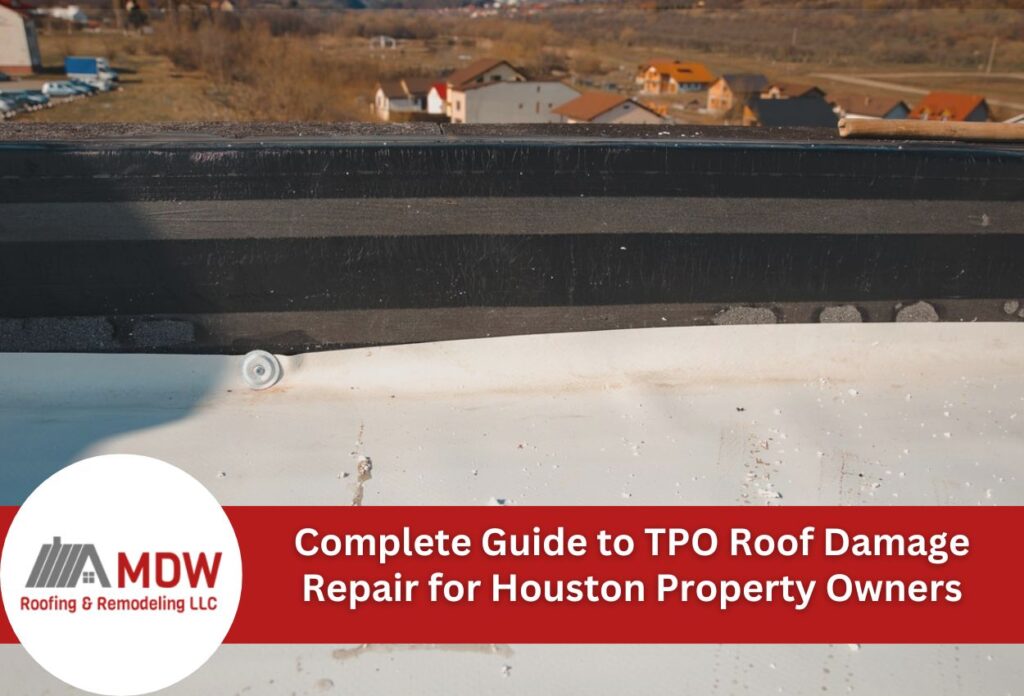
TPO membrane repair is necessary when visual indicators of roof deterioration appear. Punctures are one of the most common forms of damage, typically caused by falling branches, hail impact, or foot traffic from maintenance personnel. These openings in the membrane create direct pathways for water infiltration. Tears often develop along stress points where the TPO material experiences repeated expansion and contraction during temperature changes.
Membrane shrinkage occurs as TPO roofing systems age, causing the material to pull away from edges, penetrations, and attachment points. This natural aging process creates gaps that compromise the roof’s watertight seal. Seam separation is another critical concern, as these joints between membrane sections can fail due to inadequate installation or normal thermal movement over time.
Damage should be inspected closely by qualified TPO roofing contractors to determine the extent of the problem. Interior water stains on ceilings or walls signal active leaks that need immediate commercial roof leak repair. Ponding water accumulation on flat roof surfaces indicates drainage issues or membrane sagging that can accelerate deterioration. Membrane discoloration, particularly chalky white residue or darkened areas, suggests UV degradation or moisture infiltration beneath the surface.
Professional flat roof damage assessments help identify these subtle warning signs before they escalate and require extensive thermoplastic roof restoration work.
Professional Damage Assessment vs. DIY Inspection Methods
Property owners can conduct basic TPO roof inspections using safety equipment and systematic observation techniques. Essential tools include binoculars for distant viewing, a camera for documentation, and appropriate footwear with non-slip soles. Safety precautions require checking weather conditions, appropriately placing the ladder, and avoiding walking directly on wet or damaged membrane surfaces. A basic inspection involves examining visible areas for obvious punctures, tears, or displaced materials while documenting any concerns with photos.
The inspection process begins with an examination from the ground, looking for loose flashing, clogged drainage systems, or membrane separation along roof edges. Property owners should check accessible areas for debris accumulation, standing water, or obvious membrane damage. Interior inspection includes examining ceiling areas for water stains, mold growth, or other moisture indicators that suggest roofing problems.
Professional TPO roofing contractors provide a comprehensive damage evaluation using specialized equipment and extensive training that surpasses basic property owner capabilities. An expert assessment includes thermal imaging to detect hidden moisture infiltration, membrane adhesion testing, and core sampling when necessary. Professional inspectors identify subtle deterioration patterns that untrained observers often miss, such as membrane brittleness or seam bond failures.
Commercial roof leak repair specialists have the expertise to determine whether TPO membrane repair or complete thermoplastic roof restoration provides the most effective solution. A professional flat roof damage assessment includes detailed reporting, repair prioritization, and warranty protection that DIY methods cannot provide.
TPO Membrane Repair Techniques and Materials
Small-scale TPO membrane repair generally includes targeted patching and sealing methods that property owners can sometimes handle with proper materials and techniques. Puncture repairs typically involve cleaning the damaged area thoroughly, applying TPO-compatible primer, and installing appropriately sized patches using specialized adhesives designed for thermoplastic membranes. The repair process requires matching the patch material to the existing membrane and ensuring complete adhesion around puncture edges.
Minor tear repairs follow similar preparation steps but require different application techniques depending on the tear length and location. TPO-compatible sealants provide temporary solutions for hairline cracks, while larger tears necessitate membrane patches with overlapping coverage extending beyond damaged areas. Successful small-scale repairs depend on using manufacturer-approved materials that maintain membrane flexibility and weather resistance over time.
Extensive damage requires advanced repair techniques, professional expertise, and specialized equipment. Seam reinforcement involves heat welding using hot air tools to create permanent bonds between membrane sections. This process requires precise temperature control and proper overlap specifications that experienced TPO roofing contractors can execute safely and effectively.
Large-scale membrane welding for substantial damage areas involves removing compromised sections and installing replacement membrane pieces using professional-grade welding equipment. These advanced thermoplastic roof restoration techniques require an understanding of membrane expansion properties, proper surface preparation, and quality control testing to ensure repair durability. Commercial roof leak repair specialists possess the training and equipment necessary for complex TPO membrane repair projects that exceed basic patching.
TPO Roof Restoration as an Alternative Solution
Roof restoration is a viable alternative to TPO membrane repair when aging systems exhibit widespread deterioration. Property owners should consider restoration when multiple repair locations indicate systemic membrane degradation or when repair costs approach those of a complete replacement. Restoration makes economic sense for TPO roofing systems that retain structural integrity but show surface weathering, minor punctures, or moderate seam separation across large sections.
The restoration process begins with comprehensive surface preparation that removes debris, cleans existing membrane surfaces, and addresses any underlying drainage issues. TPO roofing contractors evaluate membrane adhesion, repair significant damage points, and ensure proper substrate conditions before proceeding. A primer is often necessary for optimal bonding between existing TPO material and restoration coatings, requiring specific products designed for thermoplastic membranes.
Professional restoration involves applying specialized coatings that extend the roof’s life while addressing minor damage simultaneously. These coatings provide renewed weather resistance, UV protection, and seamless coverage over existing seams and repair locations. The restoration process typically includes multiple coating layers with reinforcement fabric at critical stress points and penetration areas.
Thermoplastic roof restoration offers significant advantages over multiple commercial roof repairs by addressing the entire roof system comprehensively. This method provides extended warranty coverage, improved energy efficiency, and uniform appearance while avoiding the disruption associated with complete roof replacement. A flat roof damage assessment determines when restoration provides better value compared to continued individual repairs.
Choosing the Right TPO Roofing Contractor
Selecting qualified TPO roofing contractors requires verifying essential credentials that ensure professional competency and legal compliance. Licensed contractors demonstrate their commitment to industry standards and local building code requirements. Valid insurance coverage protects property owners from liability during repair work while providing recourse for potential damage or incomplete work. Manufacturer certifications indicate specialized training in specific TPO membrane systems and access to warranty programs that protect the investment.
Experience with commercial flat roofs distinguishes qualified contractors from general roofing companies that lack specific TPO expertise. Established TPO roofing contractors maintain portfolios of completed projects, references from satisfied customers, and relationships with membrane manufacturers that support quality workmanship. Professional contractors also possess specialized equipment necessary for heat welding and membrane installation techniques that create lasting repairs.
Property owners should request specific information about repair methods, material specifications, and project timelines during the initial contractor evaluation. Important questions include asking about warranty terms for both materials and workmanship, expected completion schedules, and procedures for handling unexpected damage discovered during repair work. Reputable contractors provide detailed written estimates, explain their TPO membrane repair processes clearly, and offer transparent communication throughout the project.
Quality contractors also discuss maintenance recommendations and advise how to prevent future damage through proper roof care. Their expertise enables them to identify potential problem areas and suggest preventive measures that extend the roof system’s life while protecting the property.
Making the Right Decision Between Repair vs. Replacement
Several factors determine whether TPO membrane repair or complete roof replacement is the most practical solution for damaged roofing systems. The age of the existing TPO roof plays a fundamental role in this decision-making process, as systems approaching their expected lifespan may benefit more from replacement than extensive repair work. Roofs older than 15 years with multiple damage points often require more comprehensive solutions than individual repair efforts can address effectively.
The extent and distribution of damage throughout the membrane system should also influence your decision between repair and replacement. Isolated punctures or small tears respond well to targeted TPO membrane repair techniques, while widespread deterioration affecting multiple seams and large membrane sections may warrant complete system replacement. A professional flat roof damage assessment helps determine the severity of the damage to support informed decision-making.
Long-term building plans and ownership intentions affect the cost-benefit analysis of repair versus replacement options. Property owners planning facility expansions, major renovations, or building sales within five years may find thermoplastic roof restoration more appropriate than investing in complete roof replacement. Conversely, properties intended for long-term ownership benefit from the extended service life and warranty protection that new TPO installations provide.
Energy efficiency considerations and local building code updates may also influence replacement decisions. Newer TPO systems offer improved insulation and reflective properties that reduce operating costs over time. Experienced TPO roofing contractors help property owners evaluate these multiple factors to determine the most cost-effective approach for their specific situations and long-term facility management goals.
Choose MDW Roofing & Remodeling LLC for Expert TPO Roof Damage Repair in Houston
If you’ve noticed any signs of wear or damage on your TPO roof, don’t wait for the problem to worsen. Immediate repairs are necessary for the integrity and longevity of your roofing system. At MDW Roofing & Remodeling LLC, we specialize in TPO roof damage repair and are equipped to address both common and complex issues.
Whether it’s punctures, tears, or seam issues, our team is ready to restore your roof to its optimal condition. Ignoring damage can lead to significant structural concerns and expensive repairs down the line. Reach out to MDW Roofing & Remodeling LLC today at (832) 766-9994 to schedule an inspection and discuss your repair needs.