Roofing damage in Houston stems from the city’s unique combination of extreme heat (routinely exceeding 95°F May through September), hurricane-force winds reaching 130+ mph during tropical storms, torrential rainfall averaging 53 inches annually, persistent 70-90% humidity year-round, and hail producing up to baseball-sized ice impacting at 100+ mph. These weather extremes create five primary damage patterns: heat-accelerated shingle deterioration causing granule loss and brittleness within 12-15 years versus 20+ years in moderate climates, wind-driven rain infiltration through compromised flashing during hurricane season (June-November), mold colonization in poorly ventilated attics fostered by constant moisture, ponding water from inadequate drainage overwhelming flat and low-slope residential roofs during 4-8 inch rainfall events, and impact damage from frequent severe thunderstorms producing destructive hail 15-20 days per year across Harris County.
Understanding these specific damage mechanisms enables Houston homeowners to implement targeted prevention strategies protecting their roofs from the region’s harsh climate while extending system lifespan and avoiding premature replacement costs averaging $8,000-$15,000 for typical residential projects. This guide details each major roofing challenge affecting Houston properties, provides actionable solutions backed by local contractor experience, and explains maintenance protocols specifically calibrated for Gulf Coast weather patterns ensuring maximum roof durability.
Houston’s Climate Impact on Roofing Systems
The Houston metropolitan area experiences subtropical climate conditions classified as humid subtropical (Köppen Cfa) characterized by long, hot summers with minimal temperature relief and mild winters punctuated by occasional freezing events. This climate profile subjects roofing materials to continuous thermal stress, moisture exposure, and severe weather threats creating accelerated wear patterns compared to roofs in moderate climates.
Primary climate factors causing roofing damage:
- Extreme heat exposure – Surface temperatures reaching 150-170°F on dark shingles during summer months causing asphalt softening, accelerated UV degradation, and premature material breakdown
- High humidity levels – Persistent 70-90% relative humidity promoting mold growth, wood rot in decking/framing, and corrosion of metal components including fasteners and flashing
- Heavy rainfall – Annual precipitation averaging 53 inches with individual storms dumping 4-8+ inches in hours overwhelming drainage systems and testing waterproofing integrity
- Hurricane threats – Proximity to Gulf Coast exposing properties to Category 1-5 hurricanes with sustained winds 74-157+ mph plus storm surge flooding
- Severe thunderstorms – Frequent convective storms producing damaging hail (0.75-2.75 inch diameter), straight-line winds exceeding 60 mph, and intense rainfall rates
- Thermal cycling – Rapid temperature fluctuations between day/night and seasonal extremes causing expansion/contraction stressing material connections and sealants
These combined stressors explain why Houston roofs typically require replacement 15-20 years after installation versus 25-30 years in less demanding climates, making material selection and preventive maintenance critical for maximizing roof investment returns.
Heat Damage: Houston’s Year-Round Roofing Threat
How Extreme Heat Destroys Roofing Materials
Houston’s intense summer heat represents the most persistent roofing damage factor, affecting materials 8-9 months annually (April through November) when daytime highs consistently exceed 85°F. Dark-colored asphalt shingles absorb 90% of solar radiation, reaching surface temperatures of 150-170°F even when ambient air temperature measures only 95-100°F.
This extreme heat causes multiple degradation mechanisms simultaneously:
Thermal breakdown progression:
- Asphalt binder softening – High temperatures make asphalt pliable, allowing granules to dislodge more easily during rain or wind
- Granule loss acceleration – Protective ceramic granules separate from softened asphalt backing, exposing underlying material to direct UV damage
- UV radiation degradation – Once protective granules erode, ultraviolet light breaks down asphalt molecular bonds causing brittleness and cracking
- Thermal shock cycling – Rapid cooling during evening hours causes expansion/contraction cycles stressing shingle adhesive bonds and fastener connections
- Premature material failure – Cumulative thermal damage reduces expected 20-25 year shingle lifespan to 12-15 years in Houston’s climate
The National Roofing Contractors Association confirms that roofs in hot climates experience accelerated aging, with every 10°F increase in average temperature reducing expected service life by 1-2 years due to intensified thermal stress.
Heat-Resistant Roofing Solutions
| Material Type | Heat Reflectance | Expected Houston Lifespan | Cost per Sq Ft Installed | Best For |
|---|---|---|---|---|
| Cool roof shingles (reflective granules) | 25-30% | 18-22 years | $4.50-$6.50 | Budget-conscious homeowners seeking moderate heat protection |
| Metal roofing (standing seam, corrugated) | 60-70% | 40-50 years | $8-$14 | Long-term investment, maximum durability, energy savings |
| Clay/concrete tiles | 30-40% | 50+ years | $12-$20 | Premium installations, Spanish/Mediterranean architecture |
| White membrane (TPO, PVC for flat roofs) | 70-85% | 20-30 years | $6-$10 | Flat or low-slope residential applications |
Heat protection strategies:
- Install light-colored roofing materials reflecting 40-70% solar radiation versus 10-20% for dark shingles, reducing surface temperatures 30-50°F
- Apply reflective roof coatings (elastomeric or acrylic formulations) to existing shingles providing 3-7 year UV protection extension
- Ensure proper attic ventilation (1 sq ft vent per 150 sq ft attic space minimum) removing trapped heat and moisture
- Add radiant barrier sheathing in attic reflecting 95% radiant heat before it enters living space
- Schedule roof inspections every 2-3 years checking for thermal damage indicators (granule loss, cracking, curling)
Implementing these heat mitigation strategies can extend Houston roof lifespan 20-30% while reducing cooling costs $200-$500 annually according to Department of Energy cool roof studies.
Hurricane and Wind Damage Prevention
Understanding Hurricane Threats to Houston Roofs
Houston’s position 50 miles inland from Galveston Bay provides limited protection from Gulf Coast hurricanes, with the metro area experiencing direct or near-direct hurricane impacts approximately once every 6-8 years on average. Recent major storms affecting the region include Hurricane Harvey (2017) causing catastrophic flooding, Hurricane Ike (2008) producing widespread wind damage, and Tropical Storm Allison (2001) delivering record rainfall.
Hurricane winds create three distinct damage mechanisms affecting roofing systems:
Wind damage progression:
- Uplift forces – Wind flowing over roof creates negative pressure (suction) on leeward side attempting to lift roofing materials off deck
- Edge vulnerability – Roof perimeters, corners, and ridges experience 2-3× higher wind pressures than field areas making them primary failure initiation points
- Progressive peeling – Once edge materials lift, wind penetrates underneath peeling back larger sections in zipper-like failure
- Flying debris impact – Wind-borne objects (tree limbs, building materials, outdoor furniture) puncture or tear roofing materials
- Water infiltration – Compromised roof envelope allows wind-driven rain penetrating building causing interior damage
The Insurance Institute for Business & Home Safety reports that properly installed impact-resistant shingles reduce hail and wind damage claims 30-50% compared to standard products in hurricane-prone regions.
Hurricane-Resistant Roofing Specifications
| Fortification Element | Specification | Wind Rating | Cost Impact | Damage Reduction |
|---|---|---|---|---|
| Impact-resistant shingles (Class 4 rated) | UL 2218 Class 4 certification | 110-130 mph | +$1-$2/sq ft | 30% fewer insurance claims |
| Enhanced attachment (6-nail pattern) | ASTM D3161 Class F compliance | 110+ mph | +$0.50-$1/sq ft | 40% better wind uplift resistance |
| Hurricane straps/clips | Metal connectors every rafter | 140+ mph | +$2-$4/sq ft | Prevents roof-to-wall separation |
| Sealed roof deck | Self-adhered underlayment full coverage | 110+ mph | +$0.75-$1.50/sq ft | Stops water infiltration if shingles blow off |
| Reinforced flashing | 24-gauge galvanized steel minimum | N/A | +$3-$6 per penetration | Prevents water entry at vulnerable points |
Hurricane preparation checklist:
- Install impact-resistant roofing materials meeting ASTM D3161 Class F wind resistance standards (110+ mph sustained winds)
- Use hurricane straps or clips connecting roof framing directly to wall top plates resisting 3,000+ pounds uplift force
- Apply self-adhered underlayment across entire roof deck providing secondary water barrier if shingles fail
- Reinforce roof-to-wall connections at eaves, gables, and ridge preventing structural separation during extreme winds
- Secure or remove potential flying debris from property including outdoor furniture, decorations, and loose yard items
- Schedule emergency storm damage inspection within 24-48 hours after hurricane passage documenting damage for insurance claims
Following these hurricane-resistant construction practices reduces roof failure probability during major storms while potentially qualifying for insurance premium discounts of 10-30% through fortified home programs.
Humidity and Moisture Management
How Houston’s Humidity Damages Roofs
Houston’s subtropical humidity creates year-round moisture challenges for roofing systems, with relative humidity averaging 75-90% most months creating ideal conditions for biological growth and material deterioration. Unlike arid climates where roofs remain dry between rain events, Houston roofs exist in constant moisture exposure accelerating several destructive processes.
Humidity-related damage mechanisms:
- Mold colonization – Airborne spores settling on damp surfaces germinate within 24-48 hours forming visible growth
- Algae staining – Gloeocapsa magma bacteria colonize shingle surfaces creating characteristic black streaks
- Wood rot – Roof decking, rafters, and fascia boards deteriorate when moisture content exceeds 20% for extended periods
- Metal corrosion – Fasteners, flashing, and metal roofing components rust when protective coatings fail in humid conditions
- Adhesive failure – Moisture infiltration weakens shingle adhesive bonds and sealants causing lifting and separation
The Environmental Protection Agency identifies moisture control as critical for preventing indoor air quality problems, with roof/attic moisture being a primary water vapor source entering homes in humid climates.
Preventing Moisture-Related Roof Damage
Ventilation requirements:
| Attic Square Footage | Minimum Vent Area Required | Recommended Configuration | Air Changes per Hour |
|---|---|---|---|
| 600 sq ft | 4 sq ft (576 sq in) | 2 sq ft ridge + 2 sq ft soffit | 4-6 ACH |
| 1,000 sq ft | 6.7 sq ft (960 sq in) | 3.3 sq ft ridge + 3.3 sq ft soffit | 4-6 ACH |
| 1,500 sq ft | 10 sq ft (1,440 sq in) | 5 sq ft ridge + 5 sq ft soffit | 4-6 ACH |
| 2,000 sq ft | 13.3 sq ft (1,920 sq in) | 6.7 sq ft ridge + 6.7 sq ft soffit | 4-6 ACH |
Moisture control strategies:
- Install continuous ridge vents combined with soffit vents creating natural convection airflow removing moisture and heat
- Add powered attic ventilators (PAVs) or solar-powered fans ensuring 4-6 complete air exchanges hourly in large attics
- Apply algae-resistant shingles containing copper or zinc granules inhibiting Gloeocapsa magma growth
- Install drip edge flashing at eaves directing water away from fascia and preventing wood rot
- Seal attic penetrations (wiring, plumbing, HVAC) preventing conditioned air leakage carrying moisture into attic space
- Maintain gutters and downspouts directing water 6+ feet from foundation preventing moisture issues
Proper moisture management extends Houston roof lifespan 5-10 years by preventing premature deterioration from biological growth and wood rot while improving home energy efficiency through better attic ventilation.
Rainfall and Drainage Solutions
Houston’s Extreme Rainfall Challenges
Houston leads major U.S. cities in average annual precipitation at 53 inches, with individual storms frequently delivering 4-8 inches within hours during spring and fall months. The National Weather Service reports Harris County experiences 100+ days annually with measurable precipitation, creating constant water management challenges for roofing systems.
Rainfall damage scenarios:
- Ponding water – Flat or low-slope roofs accumulating standing water for 48+ hours after rainfall accelerating membrane deterioration
- Drainage overwhelm – Undersized or clogged gutters overflowing during intense rainfall allowing water cascading down walls
- Fascia rot – Constant water exposure at roof edges deteriorating wood trim and creating entry points for moisture infiltration
- Leak development – Water pooling near chimneys, skylights, and penetrations eventually finding entry through compromised flashing
- Interior damage – Ceiling stains, insulation saturation, and structural wood deterioration from chronic leaks
The Harris County Flood Control District emphasizes that proper drainage design prevents flooding damage, with roofing playing a critical role directing water away from structures during extreme rainfall events.
Enhancing Roof Drainage Performance
Gutter system specifications:
| Roof Area (Sq Ft) | Minimum Gutter Size | Downspout Size | Downspout Spacing | Capacity (GPM) |
|---|---|---|---|---|
| Up to 800 | 5-inch K-style | 2×3 inch | Every 40 feet | 1,200 |
| 800-1,400 | 5-inch K-style | 3×4 inch | Every 40 feet | 1,800 |
| 1,400-2,000 | 6-inch K-style | 3×4 inch | Every 35 feet | 2,400 |
| 2,000+ | 6-inch K-style | 4×5 inch | Every 30 feet | 3,000+ |
Drainage improvement strategies:
- Size gutters and downspouts for Houston’s 7.5 inch per hour rainfall intensity design standard (100-year storm)
- Install gutter guards or screens preventing leaf accumulation while maintaining 95%+ water flow capacity
- Add extra downspouts reducing length between drops to 30-35 feet preventing overflow during extreme rainfall
- Extend downspout discharge 6-10 feet from foundation using splash blocks or underground drain pipes
- Slope flat roofs minimum 1/4 inch per foot directing water toward drains or scuppers
- Install overflow scuppers 2 inches below primary drain height providing emergency drainage if drains clog
- Clear debris from roof valleys, gutters, and drains quarterly preventing blockages during heavy rainfall
Proper drainage design prevents 90% of water-related roofing damage in Houston’s high-rainfall climate according to roofing industry studies, making this the most cost-effective preventive maintenance investment.
Hail Damage Recognition and Protection
Houston’s Hail Threat Profile
Houston experiences damaging hail events 15-20 days per year on average, with peak hail season March through May when atmospheric conditions favor severe thunderstorm development. Harris County typically sees 0.75-1.5 inch diameter hail annually, with larger 1.5-2.75 inch hailstones occurring in 10-20% of events causing significant property damage.
Hail damages roofing materials through kinetic energy transfer—a 2-inch diameter hailstone weighing approximately 2 ounces impacts at 50-60 mph delivering force equivalent to dropping a baseball from 100 feet onto the roof surface. This impact energy fractures shingles, punctures membranes, and dents metal roofing depending on material composition and hardness.
Hail damage indicators by material:
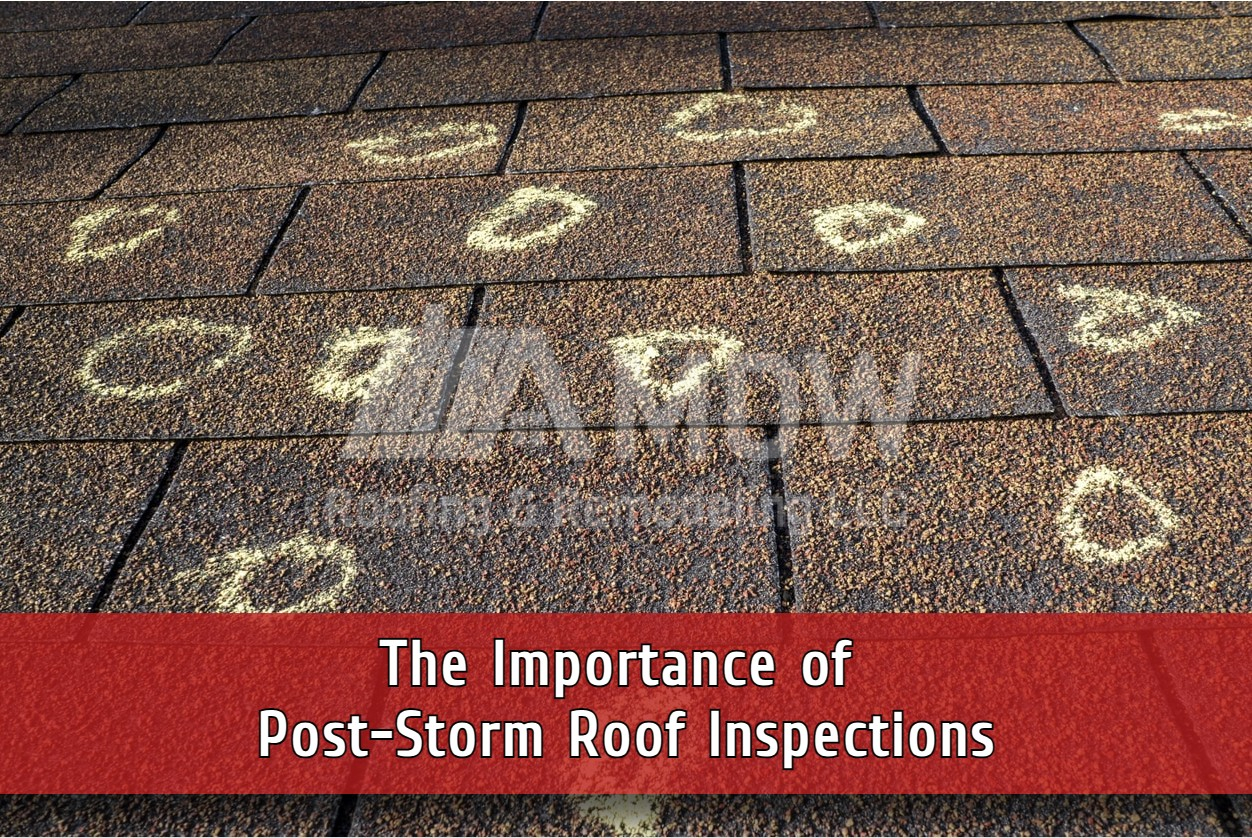
- Asphalt shingles – Random dark spots where granules dislodged, soft spots feeling spongy when pressed, exposed asphalt mat, shiny areas indicating granule loss
- Metal roofing – Visible dents or dimples, paint damage at impact points, functional damage if dents compromise water shedding
- Tile roofing – Cracked or broken tiles, chipped edges, displaced tiles requiring resetting
- Flat roof membranes – Punctures or tears, softened areas indicating subsurface damage, split seams from impact force
The National Oceanic and Atmospheric Administration’s Storm Prediction Center provides real-time hail forecasts and warnings, with Houston’s location in “Hail Alley” (extending from northern Texas through Oklahoma) increasing severe weather exposure.
Hail-Resistant Roofing Options
| Material | Impact Rating | Hail Resistance | Post-Hail Repairability | Installed Cost |
|---|---|---|---|---|
| Class 4 shingles (impact-resistant) | UL 2218 Class 4 | Withstands 2-inch @ 60 mph | Good – individual shingle replacement | $4.50-$7/sq ft |
| Standing seam metal (24-26 gauge) | ASTM D3746 Grade 2 | Withstands 1.75-inch @ 55 mph | Excellent – dents repairable | $8-$14/sq ft |
| Concrete tile (S-tile, flat tile) | AC170 Severe Hail | Withstands 2-inch @ 65 mph | Fair – must replace cracked tiles | $12-$18/sq ft |
| Slate (natural quarried) | No standard test | Excellent inherent hardness | Poor – expensive replacement | $18-$30/sq ft |
| Modified bitumen (SBS membrane) | ASTM D3746 Grade 1 | Withstands 1.5-inch @ 50 mph | Good – patch or coat repair | $4-$7/sq ft |
Hail damage prevention and response:
- Install UL 2218 Class 4 impact-resistant shingles providing highest hail protection and qualifying for 10-35% insurance discounts
- Schedule post-storm inspection within 7-14 days after significant hail documenting damage for insurance claims
- Photograph damage from multiple angles including close-ups showing impact points for claim documentation
- Obtain professional damage assessment from licensed roofing contractor before filing insurance claim
- File hail damage claims within policy time limits (typically 1 year from storm date) ensuring coverage eligibility
- Request depreciation holdback payment after completing repairs securing full claim value
Many insurance carriers offer premium discounts of 10-35% for impact-resistant roofing installations, with payback periods of 3-7 years making Class 4 shingles cost-effective even without hail damage occurring.
Essential Maintenance for Houston Roofs
Climate-Specific Maintenance Schedule
Houston’s demanding climate requires more frequent maintenance than moderate climates, with professional roofing contractors recommending semi-annual inspections timed around spring (April-May) and fall (October-November) transitional periods when weather extremes shift.
Seasonal maintenance calendar:
| Season | Timing | Priority Tasks | Reason |
|---|---|---|---|
| Spring | April-May | Inspect for winter damage, clean gutters, check flashing, trim branches | Prepare for summer heat and hurricane season |
| Summer | June-August | Monitor for heat damage, verify ventilation, check for granule loss | Detect thermal degradation early |
| Fall | September-October | Clear debris, inspect drainage, check for mold, reseal penetrations | Prepare for winter storms and verify hurricane season repairs |
| Winter | November-March | Check for leaks after cold fronts, inspect attic moisture, plan spring repairs | Address any storm damage before spring |
Essential maintenance tasks:
- Quarterly: Clear gutters and downspouts of leaves, pine needles, and debris ensuring unrestricted water flow
- Quarterly: Remove branches overhanging roof by 6+ feet preventing abrasion damage and debris accumulation
- Semi-annually: Inspect flashing around chimneys, vents, skylights, and walls for separation, corrosion, or sealant failure
- Semi-annually: Check attic ventilation ensuring soffit vents unblocked and ridge vents functioning properly
- Annually: Inspect shingles for granule loss, cracking, curling, or missing pieces indicating replacement needs
- Annually: Examine roof valleys for debris accumulation and proper water channeling
- Bi-annually: Professional inspection by licensed contractor documenting condition and planning needed repairs
Following this Houston-calibrated maintenance schedule prevents 60-70% of premature roof failures according to roofing industry studies, with annual maintenance costs of $150-$400 far less expensive than emergency roof repairs averaging $800-$3,000 per incident.
Warning Signs Requiring Immediate Attention
Critical damage indicators:
- Interior water stains on ceilings or walls indicating active leaks requiring immediate professional assessment
- Multiple missing shingles after storms exposing underlayment to weather degradation
- Sagging roof sections suggesting structural damage from water infiltration or inadequate framing
- Daylight visible through roof boards from attic indicating holes or separation requiring emergency patching
- Granules accumulating in gutters signaling advanced shingle deterioration and nearing end of service life
- Widespread algae or moss growth indicating moisture retention and potential decking damage underneath
Any of these conditions warrants immediate contractor evaluation as continued exposure accelerates damage exponentially, potentially converting $1,000-$3,000 repairs into $8,000-$15,000 roof replacements within months.
Choosing Roofing Materials for Houston’s Climate
Material Performance Comparison
| Material | Heat Resistance | Hurricane Wind Rating | Humidity Resistance | Hail Protection | Expected Houston Lifespan | Typical Cost Installed |
|---|---|---|---|---|---|---|
| 3-tab asphalt shingles | Fair | 60-80 mph | Poor | Minimal | 12-15 years | $3.50-$5/sq ft |
| Architectural shingles | Good | 110-130 mph | Fair | Good (Class 4 versions) | 15-20 years | $4.50-$7/sq ft |
| Metal roofing (standing seam) | Excellent | 140+ mph | Excellent | Very good | 40-50 years | $8-$14/sq ft |
| Concrete tiles | Very good | 110-150 mph | Excellent | Excellent | 50+ years | $12-$18/sq ft |
| Clay tiles | Very good | 110-150 mph | Excellent | Excellent | 50-75 years | $13-$20/sq ft |
| Modified bitumen (flat roofs) | Good | N/A | Good | Fair | 15-20 years | $4-$7/sq ft |
| TPO/PVC membrane (flat roofs) | Excellent | N/A | Very good | Good | 20-30 years | $6-$10/sq ft |
Material selection considerations:
- Budget-conscious installations – Architectural asphalt shingles with Class 4 impact resistance offering best balance of performance and initial cost ($4.50-$7/sq ft)
- Long-term value – Metal roofing providing 40-50 year lifespan with minimal maintenance despite higher upfront cost ($8-$14/sq ft)
- Maximum durability – Clay or concrete tile roofing lasting 50-75 years ideal for permanent homes ($12-$20/sq ft)
- Flat or low-slope roofs – TPO or PVC membranes offering superior heat reflection and 20-30 year lifespan ($6-$10/sq ft)
- Historic or architectural homes – Clay tiles matching original period design while providing hurricane and heat resistance
The proper material choice depends on budget, architectural style, expected ownership duration, and prioritized performance characteristics, with most Houston homeowners selecting either Class 4 architectural shingles (60% of installations) or metal roofing (25% of installations) based on local roofing contractor sales data.
Professional Installation Quality Standards
Why Professional Installation Matters
Even the highest-quality roofing materials fail prematurely when improperly installed, making contractor selection equally important as material choice. The National Roofing Contractors Association reports that 80% of premature roof failures result from installation defects rather than material deficiencies, emphasizing proper technique importance.
Common installation defects causing failures:
- Inadequate nailing – Too few fasteners or improper placement allowing wind uplift
- Incorrect flashing – Improper installation around chimneys, vents, and valleys creating leak pathways
- Poor ventilation design – Insufficient intake or exhaust venting causing moisture accumulation and heat buildup
- Improper overlap – Insufficient shingle overlap allowing water infiltration during wind-driven rain
- Deck preparation neglect – Installing over damaged decking concealing problems that cause failures
- Sealant application errors – Over or under-application affecting adhesion and flexibility
Contractor qualification criteria:
- Valid Texas contractor license through Texas Department of Licensing and Regulation
- Minimum $1 million general liability insurance protecting property owners from installation damage
- Workers compensation insurance covering all installation crew members
- Manufacturer certifications (GAF, CertainTeed, Owens Corning) demonstrating product knowledge
- Minimum 5+ years Houston-area installation experience understanding local climate challenges
- Written warranties covering materials (manufacturer) and workmanship (contractor minimum 5 years)
Hiring qualified, experienced contractors reduces installation defect probability from 30-40% (typical for unlicensed installers) to 5-10% (professional contractors) according to insurance industry claim data, justifying professional installation premium of 20-30% over unlicensed alternatives.
Insurance Considerations for Houston Roofs
Understanding Roof Damage Coverage
Texas homeowners insurance policies typically include roof damage coverage under dwelling protection, though specific terms vary significantly between carriers. Following 2017’s Hurricane Harvey, many insurers modified roof coverage policies in Houston reducing claim payouts and increasing policyholder costs.
Common policy structures:
- Replacement cost coverage – Pays full replacement cost without depreciation deduction providing maximum financial protection
- Actual cash value (ACV) – Pays replacement cost minus depreciation based on roof age substantially reducing claim payments
- Recoverable depreciation – Initially pays ACV amount, then releases depreciation holdback after repairs complete
- Named perils – Covers only specifically listed damage causes (wind, hail, fire) excluding wear-and-tear or maintenance neglect
- All-risk coverage – Covers all damage except specifically excluded causes providing broader protection
Policy conditions affecting coverage:
| Roof Age | Typical Coverage | Payment Method | Policyholder Cost Share |
|---|---|---|---|
| 0-10 years | Full replacement cost | 100% upfront | Deductible only ($1,000-$2,500) |
| 10-15 years | Recoverable depreciation | ACV upfront, balance after repairs | Deductible + depreciation holdback |
| 15-20 years | Actual cash value only | ACV only | Deductible + full depreciation (30-60% reduction) |
| 20+ years | Limited or no coverage | Varies by carrier | May not cover storm damage |
Maximizing insurance recovery:
- Document pre-existing roof condition with photos updated annually creating baseline for damage assessment
- Schedule professional inspection within 7-14 days after significant storm documenting damage before further deterioration
- Obtain multiple independent contractor assessments if adjuster’s damage evaluation seems inadequate
- Request policy review pre-storm understanding coverage limits, deductibles, and depreciation schedules
- Consider impact-resistant roofing installation qualifying for 10-35% premium discounts paying for upgrade in 3-7 years
- Review and understand insurance claims process before damage occurs ensuring proper documentation
Understanding policy terms before damage occurs enables homeowners making informed coverage decisions and maximizing claim recovery when storm damage inevitably affects Houston roofs.
Protecting Your Houston Roof Investment
Houston’s extreme climate demands proactive roofing strategies combining appropriate material selection, quality professional installation, regular preventive maintenance, and prompt damage response. The cumulative effect of scorching heat, hurricane winds, persistent humidity, torrential rainfall, and frequent hail creates unique challenges requiring specialized solutions calibrated for Gulf Coast conditions.
Implementing the protective measures outlined in this guide—from heat-resistant materials and hurricane reinforcement to enhanced drainage and moisture control—extends typical Houston roof lifespan from 12-15 years (neglected installations) to 18-25 years (properly maintained systems), while reducing emergency repair costs and insurance claims. The relatively modest investment in professional inspections ($150-$300 annually), preventive maintenance ($200-$500 annually), and upgraded materials (+$1-$3 per square foot) pays substantial dividends through avoided premature replacement costs ($8,000-$15,000), reduced energy consumption ($200-$500 annual savings), and insurance premium discounts (10-35% on qualified installations).
Houston homeowners facing roofing decisions benefit from consulting experienced local contractors who understand regional climate challenges and can recommend tailored solutions matching specific property conditions, budget constraints, and performance priorities. Whether planning new roof installation, considering replacement timing, or implementing preventive maintenance programs, informed decisions based on Houston’s unique weather profile maximize roofing system durability and investment returns.
For professional roofing evaluation, storm damage assessment, or preventive maintenance services in Houston and surrounding areas, contact MDW Roofing & Remodeling.