Key Points:
- Proper soffit vent installation is important for effective attic ventilation, preventing moisture, heat buildup, and reducing energy costs.
- The installation process involves planning, selecting appropriate vents, cutting precise openings, and securing them for the best possible airflow.
- Ensure balanced intake and exhaust by integrating soffit vents with ridge vents, then maintain the system for long-term efficiency.
Proper attic ventilation prevents moisture buildup, reduces energy costs, and protects your home’s structural integrity. Soffit vents play an important role in creating effective airflow throughout your attic space by allowing fresh air to enter at the eaves and working in conjunction with ridge vents to establish continuous air circulation.
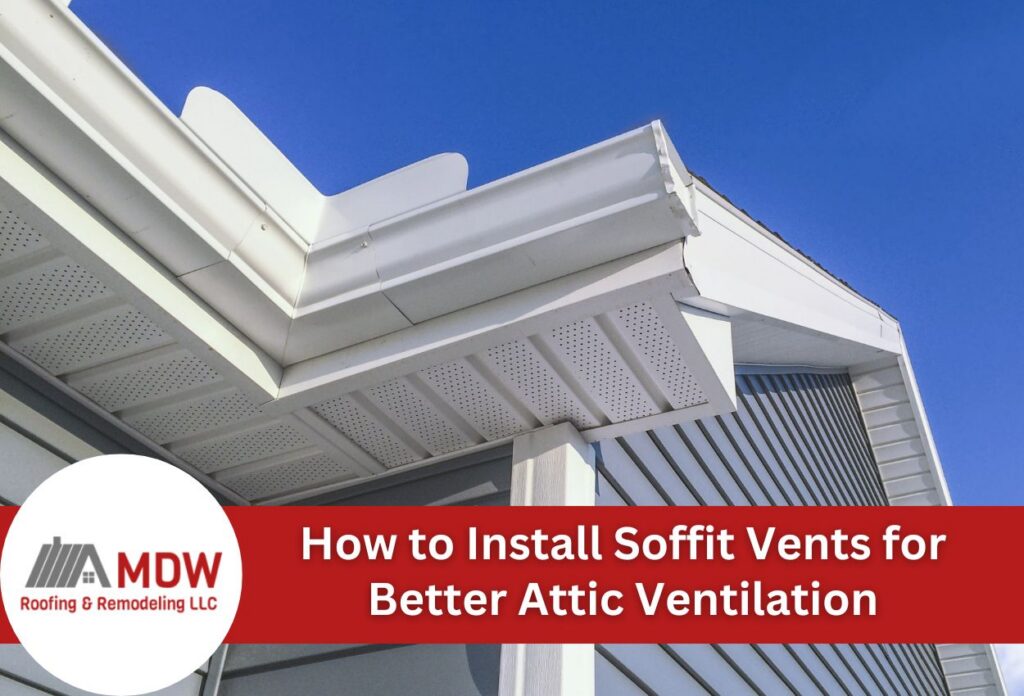
Installing soffit vents requires specific tools and techniques to ensure the best possible ventilation performance. The process involves cutting precise openings in your eave soffits and securing perforated or louvered vent covers that allow air intake while keeping pests and debris out. A complete roof ventilation system combines soffit vent installation with proper ridge vent placement to create the ideal intake and exhaust balance.
Understanding eave ventilation principles helps homeowners recognize why soffit vents are essential for attic airflow improvement. These vents work as the intake component of your ventilation system, drawing cooler outside air into the attic space where it travels upward and exits through ridge or gable vents. This continuous air movement prevents heat and moisture accumulation that can damage insulation, promote mold growth, and increase cooling costs.
Why Your Home Needs Proper Eave Ventilation
Poor attic airflow creates serious problems that threaten your home’s structural integrity and indoor air quality. Without adequate eave ventilation, trapped moisture leads to mold growth in attic spaces, while excessive heat buildup during summer forces cooling systems to work harder.
Soffit vents serve as important intake points in your roof ventilation system, drawing fresh air into the attic through the eaves. This incoming airflow travels upward through the attic space and exits through ridge vents or other exhaust points, creating continuous air circulation. This natural ventilation process removes excess heat and humidity while preventing the stagnant conditions that promote structural damage and energy waste.
Effective attic airflow improvement through proper soffit vent installation protects your roofing investment by maintaining consistent temperatures and moisture levels. The balanced air exchange prevents condensation buildup that can rot wooden structural components and compromise insulation effectiveness, ensuring your home remains comfortable and energy-efficient year-round.
Planning Your Soffit Vent Installation Project
Successful soffit vent installation begins with accurately calculating your attic’s ventilation requirements. Common building codes reference a ventilation ratio of 1 square foot of net free vent area per 150 square feet of attic area when specific conditions are met, with intake and exhaust distribution dependent on code allowances and site conditions. Measure your attic’s square footage and assess existing ridge vent installation or other exhaust points to determine how many soffit vents are needed for balanced airflow.
Selecting appropriate vent types depends on your home’s architectural style and local climate conditions. Continuous strip vents provide maximum airflow for larger attics, while individual round or rectangular vents work well for smaller spaces or homes with limited soffit area. Consider material durability when choosing between aluminum, vinyl, or steel options, as each offers different longevity and weather resistance characteristics.
The roof ventilation system design must account for your home’s specific needs and existing ventilation components. Proper eave ventilation requires strategic vent placement to avoid obstructions from roof support beams or electrical fixtures. Planning the project includes identifying soffit materials, measuring available installation space, and ensuring adequate clearance between vents for the best possible attic airflow improvement throughout the entire system.
Essential Tools and Materials for Installation
Proper soffit vent installation requires specific cutting tools to create precise openings in existing eave materials. A jigsaw with fine-tooth blades works best for vinyl and aluminum soffits, while a circular saw or reciprocating saw handles wooden soffit materials effectively. Essential measuring equipment includes a tape measure, chalk line, and level to ensure accurate vent placement and alignment along the eave line.
Safety gear remains important when working on eave ventilation projects, particularly when accessing elevated soffit areas. Protective eyewear prevents debris from entering the eyes during cutting operations, while work gloves provide a secure grip when handling sharp vent edges. A sturdy ladder with proper footing ensures safe access to soffit installation areas without compromising worker safety.
Quality soffit vents and mounting hardware determine the longevity of your attic airflow improvement project. Choose vents constructed from weather-resistant materials like aluminum or heavy-duty vinyl that resist warping and cracking over time. Corrosion-resistant screws or nails specifically designed for exterior use prevent fastener failure that could compromise vent security. Proper screening material keeps insects and debris from entering your roof ventilation system while maintaining the best possible air intake performance for effective attic ventilation.
Cutting Precise Openings and Securing Soffit Vents
Accurate measurement and marking ensure successful soffit vent installation while avoiding damage to electrical wiring or structural components. Begin by locating the center points between roof rafters, typically spaced 16 to 24 inches apart, to identify the best possible vent placement. Use a stud finder to detect any hidden electrical cables or support structures within the soffit area before marking cutting lines with a pencil or chalk.
Creating clean openings requires a careful cutting technique to prevent cracking or splintering of soffit materials. Start each cut by drilling pilot holes at the corners of marked rectangular openings, then connect these points using a jigsaw with steady, controlled movements. For round vents, use a hole saw attachment to achieve smooth edges that provide proper seating for vent flanges.
Securing soffit vents properly prevents pest intrusion while maintaining the best airflow through your roof ventilation system. Position each vent flush against the soffit surface and fasten using corrosion-resistant screws spaced every 6 to 8 inches around the perimeter. Apply weatherproof caulk around vent edges to create tight seals that block insects and moisture while allowing unrestricted air movement for effective attic airflow improvement and eave ventilation performance.
Integrating Soffit Vents with Ridge Vent Installation
Effective attic ventilation relies on the balanced relationship between soffit vents and ridge vent installation to create natural convective airflow. This system works by allowing cool air to enter through the soffit vents at the eaves while hot air exits through ridge vents at the roof peak, establishing continuous air circulation that prevents heat and moisture buildup in attic spaces.
The roof ventilation system achieves maximum efficiency when intake and exhaust components are properly balanced. Many code references and manufacturer guidelines emphasize balancing intake and exhaust net free vent area rather than prescribing a fixed intake-to-exhaust ratio. This ratio ensures an adequate air pressure differential that drives natural airflow from eaves to ridge without creating unwanted pressure imbalances that can reduce ventilation effectiveness.
Proper eave ventilation combined with ridge vents creates the stack effect, where temperature differences between inside and outside air generate upward airflow through the attic space. This natural process removes excess heat during summer and prevents moisture accumulation year-round, protecting insulation and structural components while improving overall attic airflow performance throughout your home’s ventilation system.
Maintenance and Troubleshooting Your New Ventilation System
Regular maintenance ensures your soffit vent installation continues providing the best attic airflow improvement throughout changing weather conditions. Inspect vents quarterly for accumulated leaves, debris, or insect nests that can block air intake and reduce ventilation effectiveness. Remove any obstructions carefully without damaging the vent screens or surrounding soffit materials, paying special attention to areas near trees where organic debris commonly accumulates.
Common issues with roof ventilation systems include blocked intake vents, damaged screening, and improper vent alignment that reduces airflow capacity. Signs of ventilation problems include excessive attic heat or condensation on windows. Check that soffit vents remain securely fastened and properly sealed around edges, as loose mounting hardware can create gaps that allow pest intrusion while reducing air intake efficiency.
Professional assessment becomes necessary when eave ventilation problems persist despite regular maintenance efforts. Insufficient attic airflow improvement may indicate inadequate vent sizing, blocked air pathways, or imbalanced intake and exhaust ratios within your complete ventilation system. Roofing contractors can evaluate your soffit vent installation performance, identify airflow restrictions, and recommend adjustments to restore ventilation effectiveness throughout your attic space.
Expert Soffit Vent Installation Services in Houston
Ready to enhance your home’s energy efficiency and protect it against moisture damage? Trust MDW Roofing & Remodeling LLC for professional soffit vent installation. Proper attic ventilation is important in preventing issues like mold growth and humid spaces. Our skilled team ensures balanced airflow throughout your attic, significantly reducing energy costs and improving indoor air quality.
Don’t let inadequate ventilation compromise your home’s structural integrity. Call MDW Roofing & Remodeling LLC now at (832) 766-9994 to schedule your installation and enjoy a healthier, more efficient living environment. Our expert technicians are equipped with the right tools and knowledge to get the most out of your roof ventilation system effectively.