
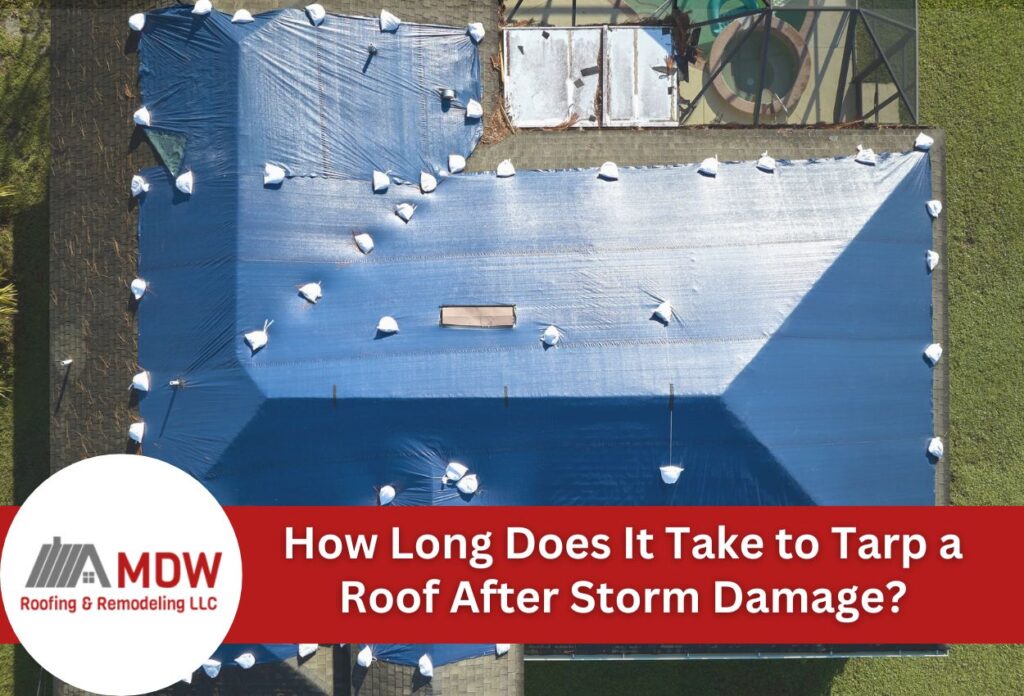

When storm damage strikes and leaves a roof exposed to the elements, time becomes critical. Emergency roof tarping provides essential temporary protection that can prevent thousands of dollars in additional water damage to the interior of a home or building. The installation process typically takes a few hours for most residential properties, though many things can significantly impact this timeframe.
The size and complexity of the damaged area play major roles in determining installation duration. A small section covering a few missing shingles might require only a couple of hours, while extensive damage across multiple roof planes could extend the process to a full day. Weather conditions are another factor. Calm, dry conditions allow for faster roof tarp installation, while ongoing storms, high winds, or wet surfaces can slow progress considerably and may require waiting for safer conditions.
Roof accessibility also affects timing. Single-story homes with easy access points allow crews to work more efficiently than multi-story buildings or roofs with steep pitches. The extent of debris removal needed before tarping can begin can add additional time to the process. Professional roofing contractors prioritize safety during emergency roof tarping, which may extend installation time but keeps workers safe throughout the process.
Understanding the roof tarping timeline before damage occurs allows homeowners to efficiently protect their property when the next storm strikes.
What You Need Before Starting Your Roof Tarping Project
Preparing beforehand ensures efficient emergency roof tarping and reduces the time required for installation. Essential materials include heavy-duty polyethylene tarps rated for outdoor use, measuring at least 6 mil thick for adequate temporary roof protection. Professional installations require 2-by-4 lumber, roofing nails or screws, and cap nails to secure the covering effectively.
Safety equipment is one of the most critical preparation aspects for roof tarp installation. Workers need non-slip footwear with good traction, safety harnesses with secure anchor points, and hard hats for head protection. Gloves are also necessary to protect hands, while safety glasses cover eyes from wind-blown particles and debris.
Additional tools streamline the installation process significantly. A hammer or nail gun speeds up securing, while a utility knife allows for precise tarp cutting. A measuring tape ensures sufficient coverage, and a ladder or scaffolding provides safe roof access. However, weather conditions must be evaluated before beginning work, as high winds or active precipitation can make emergency roof tarping dangerous and less effective. Having all materials and safety equipment ready before starting reduces installation time and improves results.
Step-by-Step Time Breakdown for Installing a Roof Tarp
The initial assessment phase typically requires less than an hour for emergency roof tarping projects. During this critical period, roofing professionals evaluate the extent of damage, identify potential safety hazards, and determine the appropriate tarp size needed for effective temporary roof protection. This assessment includes checking structural integrity and planning the safest approach for installation.
Measuring and preparation consume a similar amount of time. Workers must accurately measure the damaged area, adding several feet of overlap on all sides for complete coverage. The tarp is then unfolded and positioned at ground level, while lumber boards are cut to the appropriate lengths for securing the covering.
The positioning phase represents the most time-intensive portion, typically lasting at least one hour, depending on roof complexity and weather conditions. Teams carefully maneuver the tarp onto the roof, ensuring it is aligned over the damaged section while maintaining adequate overlap for effective roof damage prevention.
Securing and fastening the tarp requires around 30 to 60 minutes for most installations. Workers attach lumber boards along the tarp edges using roofing nails or screws spaced every 12 to 18 inches. Fastening prevents wind uplift and ensures the temporary roof protection remains in place until permanent repairs can be completed. When to replace a roof tarp often depends on how securely the initial installation was fastened and the quality of materials used during this phase.
Factors That Can Slow Down or Speed Up Your Tarping Timeline
While many factors impact the overall time it takes to tarp a roof, weather conditions significantly impact the duration and overall success. High winds above 25 mph can make emergency roof tarping dangerous and nearly impossible, often requiring crews to wait for calmer conditions. Rain or wet surfaces create slippery, hazardous working conditions that slow progress and may force delays until safer circumstances allow work to continue. Temperature extremes also affect installation speed, as cold weather makes tarps stiff and difficult to handle, while extreme heat can make working conditions uncomfortable and can reduce crew efficiency.
Roof pitch plays a crucial role in determining installation time for temporary roof protection. Steep roofs require additional safety precautions, specialized equipment, and slower movement, which can double the time needed compared to low-slope installations. Complex roof designs with multiple angles, dormers, or obstacles come with challenges that extend the installation process considerably.
Additionally, the extent of structural damage directly affects timeline expectations. Minor damage with intact decking allows for straightforward tarp placement, while severe damage requiring debris removal or structural reinforcement can add several hours to the project. Working with experienced help dramatically reduces installation time compared to solo efforts, as coordinated teamwork allows for safer, more efficient emergency roof tarping. Professional experience levels also impact the duration significantly, with seasoned contractors completing installations much faster than inexperienced individuals attempting the work themselves.
When Emergency Tarping Becomes Urgent and Time Critical
Certain situations transform emergency roof tarping from a recommended precaution into a critical race against time. Active leaks during ongoing storms are extremely urgent scenarios, where every minute of delay allows more water to entire the structure and cause escalating damage. When water begins dripping through ceilings or pooling inside a building, immediate temporary roof protection becomes essential to prevent catastrophic losses.
Forecasted severe weather creates another time-sensitive emergency for roof tarp installation. If additional storms are approaching within 24 to 48 hours of initial damage, property owners face a narrow window to secure effective roof damage prevention. Even minor roof openings can become major problems when exposed to sustained rainfall or high winds without proper covering in place.
Water damage spreads with alarming speed once it comes into a building. Within the first hour, water begins soaking into drywall, insulation, and flooring materials. After 24 hours without roof protection, mold growth can begin in warm, humid conditions. Within 48 to 72 hours, structural materials may begin to warp or deteriorate, while electrical systems face increased risk of damage. Swift action with emergency roof tarping can prevent secondary damage that often costs significantly more than the original roof repairs, making quick response times financially critical for property preservation.
How Long Your Temporary Roof Tarp Will Last
Understanding the lifespan of roof tarps helps property owners plan for permanent repairs and maintain effective temporary roof protection. Heavy-duty polyethylene tarps typically last up to three months under normal weather conditions, while lighter or lower-quality materials may only provide 30 days of reliable coverage. Canvas tarps can last 6 months or more, but cost significantly more than standard options used in most roof tarp installation projects.
Weather exposure dramatically affects tarp durability and determines when it needs to be replaced. Intense sun exposure causes UV degradation that weakens materials within weeks, while extreme temperature fluctuations create expansion and contraction stress that leads to cracking. High winds generate constant flapping motion that gradually tears fabric and loosens fasteners, and heavy snow can cause sagging or complete failure if tarps lack adequate support underneath.
Several warning signs indicate that failing temporary roof protection requires immediate attention. Visible tears, holes, or fraying edges compromise water resistance and allow moisture under the tarp. Loose or missing fasteners create areas where wind can lift the covering and cause further damage. Sagging sections collect water and debris, creating stress points that often lead to complete failure. Discoloration, brittleness, or material degradation signal UV damage that reduces effectiveness. Property owners should inspect their roof tarp weekly and after severe weather to identify these issues before they compromise the roof’s protection.
Planning Permanent Roof Repairs After Tarping
Once the roof tarps provide immediate temporary protection, property owners must begin scheduling permanent repairs. Most quality tarp installations can safely protect a structure for 90 to 120 days under normal conditions, providing adequate time to research contractors and secure the necessary materials. However, relying on temporary roof protection beyond this increases the risk of system failure and additional damage to the property.
Contractor availability often determines the timeline from temporary to permanent repairs. During peak storm seasons or after widespread damage events, qualified roofing professionals may have scheduling backlogs extending weeks. Property owners should begin contacting contractors within days of roof tarp installation to secure scheduling. Insurance claim processing adds another variable to the timeline, sometimes requiring a few weeks for adjuster visits and approval processes.
The transition period requires careful monitoring of the existing emergency roof tarping system. Weekly inspections become essential as the temporary covering approaches its recommended lifespan limits. Replacing the roof tarp is critical if permanent repairs face unexpected delays due to material shortages or weather constraints. Planning for potential tarp replacement ensures continuous damage prevention throughout the repair process. Property owners should keep backup tarping materials and establish relationships with emergency services to address any failures during the transition to permanent roofing solutions.
Secure Your Home with MDW Roofing & Remodeling LLC
When facing roof damage after a storm, securing a temporary roof tarp is a critical step to prevent further damage to your home. MDW Roofing & Remodeling LLC specializes in fast and efficient emergency roof tarping services, ensuring your home is protected quickly. Don’t wait — water damage spreads rapidly, and immediate action can significantly reduce repair costs.
We understand that every minute counts, and our expert team is ready to assess and cover your roof promptly. With the right tools, experience, and knowledge, we can typically complete the tarping process within hours, depending on the extent of damage and roof size.
If you’re unsure about the urgency of your situation, call us at (832) 766-9994 for a quick consultation. Let MDW Roofing & Remodeling LLC help safeguard your home with professional tarp installation before permanent repairs can be made.