
Key Points:
- Are tile floors expensive? Costs vary by material, labor, and prep, but often offer excellent long-term value compared to other flooring options.
- Your tile investment depends on material quality (ceramic vs. porcelain), room complexity, and the type of subfloor preparations needed.
- Regardless of cost, tile flooring is a smart investment due to its durability, low maintenance, and potential for increased home value over time.
Are tile floors expensive? The answer depends on several interconnected factors that influence your total investment. Tile flooring costs vary significantly based on material selection, installation complexity, and preparation requirements, making it essential to understand these components before starting your project.
Factors that impact the final tile selected include square footage of the area, subfloor preparation needs, and labor expenses. Ceramic tile installation prices typically differ from porcelain options, with porcelain generally costing higher due to its enhanced durability and water resistance. However, both materials often provide better long-term value compared to alternatives requiring frequent replacement.
When comparing the cost of porcelain tile to other flooring options, tile floors frequently offer competitive pricing against hardwood and luxury vinyl options. While tile floor replacement expenses may seem expensive at first, the longevity and low maintenance requirements often result in lower lifetime costs. Affordable tile flooring options exist across various price ranges, allowing homeowners to find solutions that match their budget while achieving their desired look.
Key Factors That Influence Your Tile Floor Choice and Investment
Material quality represents the most significant variable affecting tile flooring cost. Basic ceramic tiles offer budget-friendly entry points, while mid-grade porcelain provides enhanced durability at moderate price increases. Premium natural stone options like marble or travertine command the highest material costs but deliver unmatched aesthetic appeal and potential increases in home value.
Room dimension and layout complexity directly impact ceramic tile installation prices through the labor required. Simple rectangular spaces require less time for cutting and fitting, while bathrooms with multiple angles, fixtures, and obstacles increase installation length. Subfloor preparation needs can also affect project budgets, particularly when existing flooring has to be removed, leveled, or structural repairs need to be made.
When evaluating tile flooring options, consider that intricate patterns, diagonal layouts, and custom borders require additional skilled labor time. Tile floor replacement expenses also vary based on accessibility challenges, such as stairs or tight spaces that complicate material transport and installation processes.
| Project Step | Cost (Estimate) |
| Removing the Old Floor | $2.00 – $7.00 per sq. ft. |
| Fixing the Subfloor | $3.00 – $10.00 per sq. ft. |
| The Tile & Materials | $2.00 – $15.00+ per sq. ft. |
| Installation Labor | $3.00 – $15.00 per sq. ft. |
Tile Installation: Labor and Material Breakdown
Professional installation represents a significant portion of tile floor installation prices, with skilled labor ensuring proper adhesion and long-lasting results. Labor rates tend to include surface preparation, precise tile placement, grouting, and cleanup services. Experienced installers bring specialized tools and expertise that prevent common installation mistakes that could ruin your investment over time.
Beyond the tiles themselves, tile flooring cost factors include essential materials that complete your project. Underlayment provides crucial moisture protection and a smooth substrate, while high-quality adhesives ensure permanent tile bonding. Grout selection affects both appearance and maintenance requirements, with epoxy options offering superior stain resistance compared to standard cement-based alternatives.
Trim pieces and transition strips add finishing touches that create professional-looking results while protecting tile edges from damage. These components contribute to tile floor replacement expenses but provide necessary functionality between different flooring surfaces. When evaluating affordable tile flooring options, remember that quality materials tend to prevent future problems that could require expensive repairs or complete reinstallation.
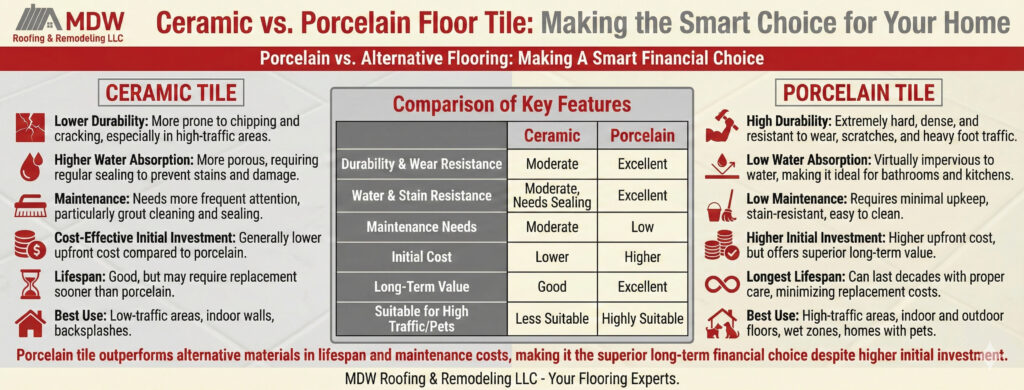
Porcelain vs. Alternative Flooring: Making A Smart Financial Choice
Comparing long-term value between porcelain tile and alternative flooring materials reveals significant differences in durability and maintenance costs. Porcelain tile consistently outperforms carpet, vinyl, and laminate options in lifespan, often lasting decades with minimal upkeep. While initial ceramic tile installation prices may exceed carpet or vinyl flooring costs, the reduced need for replacement makes porcelain a cost-effective choice over time.
Installation complexity varies dramatically between flooring materials, directly affecting upfront investment requirements. Tile flooring installation typically includes subfloor preparation and waterproofing steps that other materials may not require. However, flooring options that are easier to install like carpet may require replacement every few years, and laminate is susceptible to moisture damage, which often results in higher cumulative expenses. Hardwood flooring requires periodic refinishing and careful moisture management, adding ongoing maintenance costs that porcelain tile eliminates.
When evaluating porcelain tile vs. other flooring costs, consider that porcelain is able to handle heavy foot traffic, pets, and spills without permanent damage. Affordable tile flooring options provide decades of service while maintaining appearance, whereas alternative materials show patterns of wear and require frequent cleaning or replacement. This durability makes tile floor replacement expenses less frequent, ultimately delivering superior value despite higher initial investment requirements.
Budget-Friendly Tile Options That Don’t Sacrifice Quality
Smart material selection allows homeowners to achieve beautiful tile floors without breaking their budget. Standard ceramic tiles provide excellent durability and water resistance at a fraction of premium costs, making them ideal affordable tile flooring options for most residential applications. These tiles offer consistent quality and performance while keeping ceramic tile installation prices manageable for budget-conscious projects.
Mid-grade porcelain tiles deliver enhanced strength and versatility without premium price tags associated with designer collections. When comparing porcelain tile vs. ceramic, these options frequently provide superior value through extended lifespans and minimal maintenance requirements. Strategic color and pattern selections can create high-end appearances using budget-friendly materials, maximizing visual impact while controlling tile flooring cost factors.
The design of your planned tile floor may also have a slight influence on labor costs. Straightforward grid patterns reduce cutting waste and installation time compared to complex diagonal or herringbone layouts. Planning tile layouts to minimize partial tiles around room perimeters reduces material waste and keeps tile floor replacement expenses reasonable. Simple grout color choices that complement tile selections create cohesive appearances without requiring expensive accent pieces or intricate design work.
Hidden Expenses in Tile Floor Replacement Projects
Tile floor replacement expenses often include unexpected costs that catch homeowners off guard during project planning. Removal and disposal of existing flooring materials represents a significant hidden expense, particularly when dealing with multiple layers or specialized materials like vinyl asbestos tiles that require professional help. Subfloor damage frequently emerges after old floors are removed, revealing water damage, uneven surfaces, or structural issues that demand immediate attention before tile installation can proceed.
Ceramic tile installation prices typically exclude these preparation costs, which can substantially impact your total project budget. Disposal fees vary based on material type and local regulations, with some materials requiring special handling that increases removal expenses. Subfloor repairs might involve leveling compounds, moisture barrier installation, or complete substrate replacement in severely damaged areas, transforming affordable tile flooring options into more substantial investments.
Finishing touches represent another category of frequently overlooked tile flooring cost factors that complete professional installations. Transition strips between different flooring surfaces, baseboard replacement or adjustment, and door trim modifications ensure seamless integration with existing home features. These components significantly affect the final appearance and functionality of your tile floors, making them essential rather than optional expenses in most replacement projects.
Maximizing Value: When Tile Flooring Makes Financial Sense
Strategic tile placement in high-traffic areas and moisture-prone spaces maximizes your return on investment while addressing areas where durability matters most. Entryways, kitchens, and bathrooms benefit tremendously from tile’s resistance to water damage and heavy foot traffic, making these spaces ideal candidates despite higher ceramic tile installation prices compared to alternatives. These locations experience the greatest wear and potential damage from daily use, where tile’s resilience provides exceptional long-term value.
Even with all the costs involved, tile flooring is still favorable when considering maintenance savings over time. Unlike carpet that requires professional cleaning or hardwood needing periodic refinishing, tile floors maintain their appearance with simple cleaning routines. This reduced maintenance translates to substantial savings that offset initial tile floor replacement expenses within several years of installation.
Enhancing property value represents another compelling financial benefit of tile floor installation. Quality tile floors appeal to potential buyers and contribute to home marketability, particularly in moisture-prone areas where buyers expect durable solutions. These improvements often recover significant portions of installation costs through increased property values, making affordable tile flooring options smart investments for both current enjoyment and future resale potential.
Discover Affordable Tile Flooring with MDW Roofing & Remodeling LLC
Exploring tile flooring options can seem daunting due to the perceived high costs. However, MDW Roofing & Remodeling LLC offers budget-friendly solutions that do not compromise on quality. Whether you’re considering ceramic or porcelain tiles, we provide a wide range of cost-effective choices that ensure durability without breaking the bank. Our expert team can guide you through each step, from selection to installation, helping you make informed decisions that align with your budget and design preferences.
Call MDW Roofing & Remodeling LLC today at (832) 766-9994 to discuss your tile flooring project and discover how we can deliver exceptional value and aesthetic appeal to your home.