Roof replacement in Houston becomes necessary when age, storm damage, or material deterioration compromises waterproofing integrity and structural protection—critical indicators include widespread shingle damage affecting 30%+ of roof area (granule loss exposing asphalt substrate, curling edges pulling from nails, missing sections creating direct water entry points), active leaks evidenced by interior ceiling stains or attic moisture particularly after rainfall, sagging roof sections suggesting structural failure from prolonged water exposure or inadequate framing, material-specific failures (delaminating composite shingles, corroded metal panels, cracked concrete tiles, powdering slate surfaces), age exceeding 75-85% of expected lifespan (15-18+ years for standard asphalt shingles, 35-40+ years for metal roofing, 40-50+ years for concrete tiles in Houston’s climate), and performance degradation including rising energy bills from compromised insulation or visible daylight through roof boards indicating gaps requiring immediate attention.
The 12 critical roof replacement signs:
- Widespread shingle damage – Granule loss, curling, or cracking affecting 30%+ of roof area
- Active leaks – Water stains on ceilings, attic moisture, or interior mold growth after rainfall
- Missing shingles – Wind-removed sections exceeding 15-20% of total roof area
- Sagging roof sections – Visible depression or bowing indicating structural failure
- Age exceeding 75-85% of expected lifespan – 15-18+ years for standard asphalt shingles in Houston
- Multiple cracked or broken tiles – 15%+ of concrete/clay tiles showing damage
- Metal roof corrosion – Rust affecting 20%+ of panels, particularly at fasteners
- Exposed or deteriorated underlayment – Visible felt or synthetic membrane through gaps
- Rising energy bills – Increased heating/cooling costs from compromised insulation
- Daylight through roof boards – Visible light in attic indicating holes or gaps
- Biological growth – Algae, moss, or mold covering 30%+ of surface retaining moisture
- Storm damage – Hail impacts, wind damage, or debris strikes affecting 40%+ of roof
Houston’s subtropical climate featuring 95°F+ temperatures exceeding 100 days annually, 53 inches average rainfall with 4-8 inch intensity storm events, 70-90% humidity promoting biological growth, hurricane-force winds (130+ mph during major storms like Hurricane Harvey), and intense UV radiation accelerates roof deterioration 20-30% faster than moderate climates—asphalt shingles rated for 25-30 year national lifespans typically require replacement at 18-22 years locally, while metal roofing achieves 35-45 years versus 50+ year ratings, and tile systems last 40-60 years compared to 75-100+ year potential in ideal conditions. This accelerated aging combined with periodic severe weather events (hail, wind, flooding) creates average residential roof replacement frequency of 18-25 years in Houston versus 25-35 years nationally.
Proactive replacement when roofs reach 75-85% of expected lifespan or when repair costs exceed 30-40% of replacement expense prevents water infiltration damaging wall framing, insulation saturation, interior mold growth, and ceiling/drywall destruction totaling $5,000-$20,000+ remediation beyond roof costs while allowing planned contractor selection, material evaluation, and scheduled installation avoiding emergency premiums of 30-50% over routine pricing. This comprehensive guide examines Houston-specific replacement indicators by material type, age-based decision frameworks, complete cost analysis including hidden expenses, contractor selection criteria, insurance claim navigation, and timeline expectations ensuring informed decisions protecting home value while minimizing disruption.
Understanding Roof Replacement Timing in Houston
Houston’s demanding climate creates compressed roof lifespans relative to national averages, with extreme heat, heavy rainfall, hurricane exposure, and persistent humidity combining to accelerate material deterioration mechanisms requiring homeowners establish realistic replacement expectations aligned with local environmental conditions rather than manufacturer specifications based on moderate climates.
Houston climate replacement accelerators:
| Climate Factor | Houston Conditions | Material Impact | Lifespan Reduction vs. National Average |
|---|---|---|---|
| Extreme heat | 95°F+ temperatures 100+ days, 150-170°F surface temps | Thermal cycling stress, shingle brittleness, sealant degradation | 15-20% faster aging for asphalt shingles |
| Heavy rainfall | 53 inches annual average, 4-8 inch storm intensities | Water infiltration testing seam integrity, accelerating underlayment deterioration | 10-15% faster failure for penetration flashings |
| Hurricane winds | 130+ mph sustained during major storms | Fastener pullout, shingle blow-off, structural stress | Storm damage events every 5-10 years typical |
| High humidity | 70-90% relative humidity year-round | Biological growth (algae, moss, mold), wood rot in vulnerable areas | Organic material deterioration 25-35% faster |
| UV radiation | Year-round intense sun exposure, 1,600-1,800 sunshine hours | Polymer degradation, granule loss, color fading | Dark shingles fade 30-50% faster than light colors |
| Hail exposure | 15-20 hail days annually, 0.75-1.5 inch diameter typical | Direct impact damage requiring spot repairs or replacement | Severe hail every 7-10 years creates replacement events |
The National Roofing Contractors Association reports hot humid climates reduce material lifespans 20-30% compared to temperate regions, with Houston’s combination of heat, moisture, and severe weather representing particularly challenging conditions. Understanding these accelerators helps homeowners recognize when visible damage or age indicators signal replacement necessity versus continued maintenance viability.
Material-Specific Replacement Indicators
Different roofing materials demonstrate unique failure patterns and replacement timing, with damage recognition requiring material-specific knowledge distinguishing minor repairable issues from systemic deterioration warranting complete replacement.
Asphalt Shingle Replacement Signs
Asphalt shingles represent 80%+ of Houston residential roofing due to moderate cost ($350-$500 per square installed), reasonable 18-25 year local lifespan, and adequate performance in demanding conditions. Recognition of deterioration patterns enables timely replacement before catastrophic failures.
Critical asphalt shingle indicators:
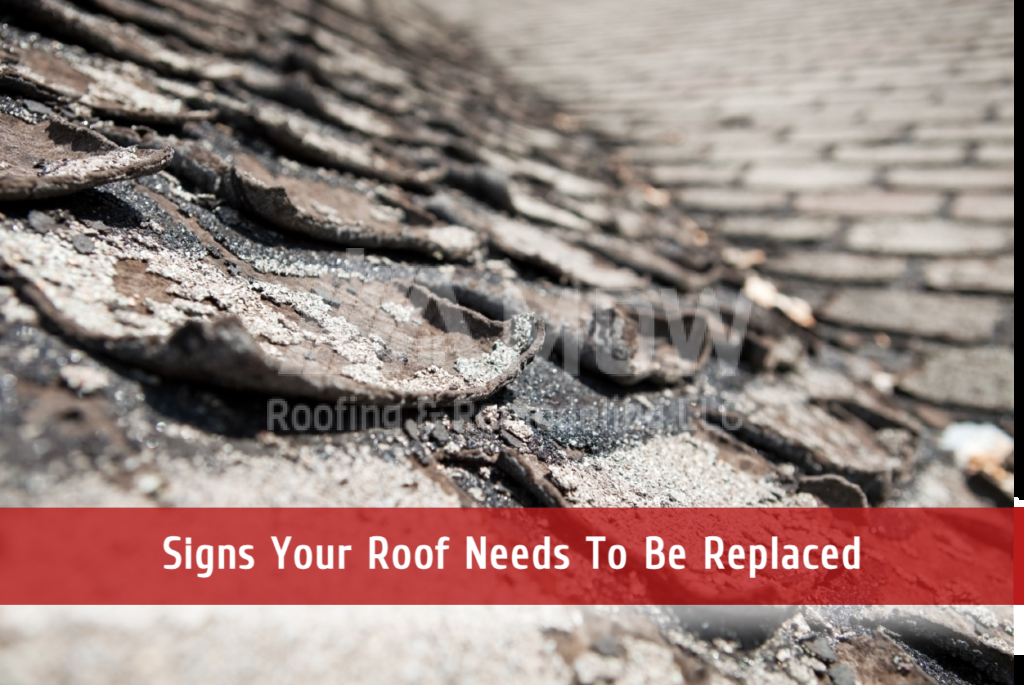
- Widespread granule loss – Bare spots exposing black asphalt substrate across 20%+ of roof area, heavy granule accumulation (1/4+ inch) in gutters signaling advanced aging
- Curling or buckling – Shingle edges lifting or curling upward from thermal stress or moisture exposure affecting multiple roof sections
- Cracking – Fractures through shingle body compromising waterproofing, particularly if cracks extend across multiple adjacent shingles
- Missing shingles – Wind-removed sections exceeding 10-15% of total roof area indicating widespread adhesive or fastener failure
- Blistering – Bubbles or raised areas from trapped moisture showing multiple locations suggesting underlayment problems
- Algae/moss growth – Dark streaking or biological growth covering 30%+ of roof surface retaining moisture accelerating deterioration
- Exposed nail heads – Fasteners visible or backing out from wood movement indicating aging and potential leak points
Age-based replacement guidance for asphalt shingles:
| Shingle Quality | National Lifespan | Houston Lifespan | Replacement Timing | Cost Range (2,000 sq ft roof) |
|---|---|---|---|---|
| 3-tab economy | 20-25 years | 15-18 years | Replace at 13-15 years or 20%+ damage | $7,000-$10,000 |
| Architectural standard | 25-30 years | 18-22 years | Replace at 16-19 years or 25%+ damage | $9,000-$14,000 |
| Premium/designer | 30-50 years | 22-30 years | Replace at 19-26 years or 30%+ damage | $12,000-$20,000 |
| Impact-resistant (Class 4) | 30-50 years | 25-35 years | Replace at 22-30 years or 30%+ damage | $14,000-$22,000 |
Houston’s heat exposure makes dark-colored shingles particularly vulnerable—black, dark brown, or dark gray shingles absorb 80-90% of solar radiation versus 30-50% for lighter colors, creating surface temperatures exceeding 170°F accelerating granule loss and brittleness. Homeowners with dark shingles should expect 15-20% shorter lifespans than lighter alternatives.
Metal Roofing Replacement Criteria
Metal roofing—including standing seam steel, corrugated panels, and metal shingles—provides 35-50 year Houston lifespans, superior wind resistance, and excellent energy efficiency through solar reflectance but demands different evaluation criteria than asphalt alternatives.
Metal roof replacement indicators:
- Widespread corrosion – Rust or oxidation affecting 20%+ of panels, particularly at fastener locations or panel overlaps
- Loose or missing panels – Sections detached from substrate or blown off during storms indicating fastener failure
- Sealant failure – Gaps at panel seams, ridges, or penetration flashings allowing water infiltration
- Denting/damage – Multiple impact dents from hail or debris compromising panel integrity or aesthetic appearance
- Coating degradation – Painted finishes fading, chalking, or peeling across large areas exposing base metal
- Fastener pullout – Exposed or backing-out screws creating leak points and panel movement
Metal roofing installed 1990s-2000s using exposed fastener systems experiences higher replacement rates (30-40 years typical) versus concealed fastener standing seam installations (45-60+ years) due to fastener seal deterioration. Houston homeowners with exposed fastener metal should inspect fastener condition annually after year 25, while standing seam systems require less frequent replacement evaluation.
Tile and Slate Roofing Replacement Signs
Concrete and clay tile roofing provides 40-75+ year Houston lifespans when properly installed and maintained, with slate achieving 75-100+ years, though underlayment failures often necessitate replacement before tile material deterioration occurs.
Tile/slate replacement indicators:
- Multiple cracked tiles – 15%+ of tiles showing fractures, chips, or complete breaks exposing underlayment
- Slipped or displaced tiles – Tiles sliding out of position from fastener corrosion or installation defects
- Underlayment failure – Visible deteriorated felt or synthetic underlayment through gaps indicating 40-50 year underlayment lifespan exceeded
- Spalling/surface erosion – Concrete tiles showing surface degradation, pitting, or powder formation
- Delamination – Slate layers separating or flaking indicating mineral structure breakdown
- Widespread biological growth – Moss or algae covering 40%+ of tile surfaces retaining moisture
Tile roof replacement decisions often center on underlayment condition rather than tile deterioration—replacing underlayment requires removing/resetting all tiles (labor-intensive process costing 70-80% of complete replacement), making simultaneous tile replacement economically logical when underlayment reaches end of service life at 40-50 years despite tiles remaining serviceable for decades longer.
Age-Based Replacement Decision Framework
Roof chronological age critically influences replacement timing decisions, with proactive replacement before catastrophic failure enabling planned execution avoiding emergency pricing and extended property exposure during reactive crisis response.
Age-based replacement matrix:
| Roof Type | Age Range | Condition Assessment | Recommended Action | Reasoning |
|---|---|---|---|---|
| Asphalt (all types) | 0-12 years | Good condition, minor issues | Repair damage, maintain regularly | Roof in first 60-75% of expected lifespan |
| 13-18 years | Moderate wear, scattered damage | Evaluate repair costs vs. replacement value | Approaching 75-90% expected lifespan | |
| 18-22 years | Significant aging, widespread issues | Plan replacement within 1-3 years | At or exceeding expected Houston lifespan | |
| 22+ years | Advanced deterioration | Replace immediately | Beyond expected service life, failure imminent | |
| Metal roofing | 0-25 years | Good condition, minimal corrosion | Inspect/maintain, spot repair as needed | Early/middle service life |
| 25-35 years | Moderate aging, some panel/fastener issues | Monitor closely, budget for replacement | Approaching typical replacement window | |
| 35-45 years | Advanced aging, multiple problem areas | Plan replacement within 2-5 years | At expected Houston lifespan end | |
| 45+ years | Significant deterioration | Replace as budget allows | Exceeded typical service life | |
| Tile/slate | 0-35 years | Good condition, occasional tile damage | Replace damaged tiles, maintain underlayment | Early/middle service life |
| 35-50 years | Underlayment aging, more frequent tile issues | Inspect underlayment condition thoroughly | Underlayment approaching failure | |
| 50-75 years | Underlayment failure likely, accumulated tile damage | Replace underlayment and evaluate tile reuse | Underlayment exceeded service life | |
| 75+ years | Varies by material quality | Case-by-case assessment | Slate may continue, concrete tiles likely replaced |
The “75% rule” suggests proactive replacement when roofs reach 75% of expected Houston lifespan enables orderly planning, contractor selection, and avoiding emergency scenarios—for standard architectural shingles with 20-year Houston expectancy, homeowners should begin replacement planning at 15 years, obtaining estimates and selecting contractors at 16-17 years, and scheduling installation at 18-19 years before widespread failures force reactive response.
Complete Roof Replacement Cost Analysis
Understanding total replacement costs including material, labor, removal, disposal, ancillary work, and potential hidden expenses enables accurate budget planning and prevents surprise overruns derailing projects or forcing lower-quality material compromises.
Primary Cost Components
Typical Houston residential replacement costs (2,000 sq ft roof, standard complexity):
| Cost Component | Description | Typical Range | Percentage of Total | Variables Affecting Cost |
|---|---|---|---|---|
| Material | Shingles, underlayment, starter strips, ridge caps | $2,500-$7,000 | 25-35% | Material grade, brand, color, special features |
| Labor | Tear-off, installation, crew costs | $4,000-$9,000 | 40-50% | Roof complexity, pitch, access, crew experience |
| Disposal | Hauling and dump fees for old materials | $500-$1,500 | 5-10% | Material type, weight, disposal facility fees |
| Deck repair | Replacing damaged plywood/OSB sheathing | $500-$2,000 | 5-10% | Extent of water damage, wood rot discovered |
| Flashing/trim | Valleys, penetrations, drip edge, rake trim | $300-$800 | 3-5% | Number of penetrations, chimney size, complexity |
| Ventilation | Ridge vents, soffit vents, attic fans | $200-$600 | 2-4% | Existing ventilation adequacy, code requirements |
| Permit/fees | Building permits, inspection fees | $100-$300 | 1-2% | Jurisdiction requirements, project value |
| Overhead/profit | Contractor business expenses, markup | $1,000-$3,000 | 10-15% | Company reputation, warranty offerings, demand |
| Total installed cost | Complete project expense | $9,100-$24,200 | 100% | Typical range $11,000-$16,000 for standard projects |
Additional cost factors increasing project expense:
- Steep pitch (>6:12) – Adds 25-40% labor costs due to safety equipment, slower installation, higher insurance
- Multiple stories – Two-story homes add 15-25% labor costs, three-story add 30-50% from access challenges
- Architectural complexity – Multiple valleys, dormers, hips, or turrets increase labor 20-40%
- Access limitations – Tight lot lines, landscaping, or limited vehicle access adds 10-20%
- Material upgrades – Impact-resistant, designer, or premium shingles add $2,000-$8,000
- Underlayment upgrade – Synthetic underlayment versus standard felt adds $300-$800
Hidden Costs and Budget Contingencies
Smart homeowners budget 10-20% contingency beyond quoted costs covering unexpected issues discovered during installation—old roofs often hide problems invisible during exterior inspection becoming apparent only after removal.
Common unexpected expenses:
- Extensive deck rot – Water infiltration may have rotted 20-40% of deck requiring replacement ($1,500-$5,000 additional)
- Structural issues – Sagging rafters, damaged trusses, or inadequate framing discovered ($2,000-$10,000+ repairs)
- Code upgrades – Older homes may require ventilation improvements, ice/water shield, or other code compliance ($500-$2,000)
- Chimney repairs – Flashing replacement exposes chimney deterioration requiring masonry work ($1,000-$5,000)
- Fascia/soffit damage – Rot or deterioration requiring board replacement before roof installation ($800-$2,500)
- Attic insulation – Compressed or inadequate insulation warranting upgrade during roof replacement ($1,000-$3,000)
Professional contractors provide detailed written estimates specifying inclusions and exclusions, with reputable companies clearly communicating when additional work becomes necessary rather than surprising homeowners with inflated final bills.
Recognizing Immediate Replacement Urgency
Certain damage conditions demand immediate replacement action preventing progressive deterioration, safety hazards, or catastrophic failures creating far greater expenses than proactive replacement costs.
Emergency replacement triggers:
- Active leaks during rainfall – Water entering living spaces during storms indicates failed waterproofing requiring immediate attention preventing interior damage
- Widespread storm damage – Hurricane, tornado, or severe thunderstorm damage affecting 40%+ of roof area
- Complete shingle blow-off – Large sections (100+ sq ft) of missing shingles exposing underlayment or deck to weather
- Structural sagging – Visible roof depression or bowing indicating possible deck, rafter, or truss failure
- Interior water staining – Brown ceiling stains, wall discoloration, or visible mold growth from ongoing moisture infiltration
- Daylight visible through roof – Holes or gaps allowing light penetration signaling immediate water entry during next rainfall
- Tree damage – Fallen limbs or entire trees penetrating roof structure requiring emergency assessment
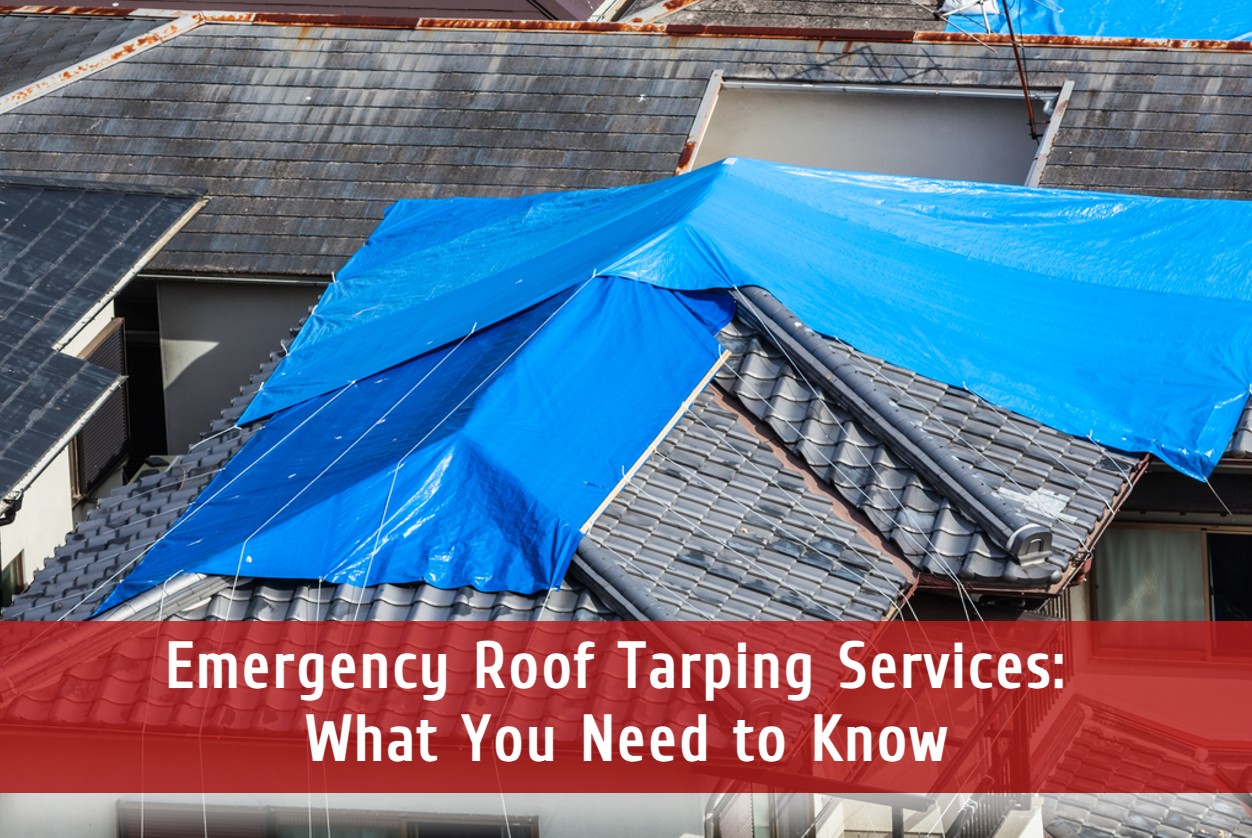
Emergency replacements typically cost 30-50% premium over routine planned projects due to immediate mobilization requirements, premium labor rates, expedited material delivery, and potential temporary protective measures (tarping costing $500-$2,000) bridging gap until permanent installation. Despite premium costs, delaying emergency repairs risks exponential damage—a $20,000 emergency replacement proves vastly cheaper than $20,000 roof plus $10,000-$30,000 interior restoration from prolonged water exposure.
Repair Versus Replacement Economics
Determining whether damaged roofs warrant repair or complete replacement requires evaluating damage extent, remaining lifespan, repair costs relative to replacement expense, and total cost of ownership over planning horizon.
Repair vs. replacement decision factors:
| Factor | Favor Repair | Favor Replacement | Neutral/Case-by-Case |
|---|---|---|---|
| Damage extent | <20% of roof area affected | >40% of roof area affected | 20-40% requires cost comparison |
| Roof age | <60% of expected lifespan | >80% of expected lifespan | 60-80% depends on remaining value |
| Repair cost | <25% of replacement cost | >40% of replacement cost | 25-40% evaluate both options thoroughly |
| Recent repairs | No significant repairs last 5 years | $2,000+ repairs within last 3 years | Multiple minor repairs suggesting pattern |
| Material availability | Exact match available | Discontinued/unavailable materials | Partial match acceptable or not |
| Property plans | Selling within 1-2 years | Long-term ownership (10+ years) | Mid-term ownership (3-8 years) |
Example scenario analysis:
Situation: 16-year-old architectural asphalt shingle roof (22-year Houston expectancy = 73% age) with 25% damaged area requiring $4,500 repair versus $13,000 replacement
Analysis:
- Remaining lifespan: ~6 years
- Repair cost as % of replacement: 35%
- Annual repair cost: $4,500 ÷ 6 years = $750/year
- Annual replacement cost: $13,000 ÷ 22 years = $591/year (or $13,000 ÷ 6 remaining years = $2,167/year)
Decision: Replacement provides better value—paying $750/year to extend roof 6 years versus $591/year for complete 22-year solution, plus repair doesn’t address aging across undamaged areas that will likely fail within 3-5 years requiring replacement anyway.
The “30% rule” provides quick guidance—when repair costs exceed 30% of replacement expense, replacement typically offers superior long-term value unless property ownership horizon under 2-3 years or roof age under 50% expected lifespan.
Professional Contractor Selection
Roof replacement quality critically determines long-term performance, warranty validity, and value realization—proper contractor selection ensures installations meeting manufacturer specifications while avoiding fly-by-night operators or unlicensed storm chasers offering suspiciously low pricing masking substandard work.
Essential Contractor Qualifications
Minimum contractor requirements:
- Licensing – Valid Texas contractor license verifying competency and regulatory compliance
- Insurance – Minimum $1 million general liability coverage plus workers compensation for crew members
- Manufacturer certification – Current certification from shingle manufacturers demonstrating training and quality standards
- Local presence – Established Houston-area business (5+ years) with physical address and permanent operations
- References – Recent (within 12 months) similar projects with verifiable satisfied customer contacts
- Written estimates – Detailed proposals specifying materials, scope, timeline, payment terms, warranties
- Warranty offerings – Minimum 5-year workmanship warranty plus manufacturer material warranties
The Better Business Bureau and Texas Department of Licensing and Regulation provide contractor verification resources enabling homeowners confirm licensing, check complaint histories, and validate insurance coverage before signing contracts or making deposits.
Red Flag Warning Signs
Certain contractor behaviors or business practices signal potentially problematic operators homeowners should avoid regardless of pricing advantages claimed.
Contractor warning signs:
- Unsolicited door-to-door solicitation – Especially after storms offering “free inspections” and pressure tactics
- Requests for full payment upfront – Reputable contractors request 10-30% deposits with balance due upon completion
- No physical address – Only mobile phone contact without office location or permanent business presence
- Significantly lowest bid – Quotes 30%+ below competitors often indicate substandard materials or corner-cutting
- Pressure tactics – “Today only” pricing, claims of limited material availability, or urgency without cause
- Cash-only payment – Avoiding paper trails suggests tax evasion, lack of insurance, or unlicensed operations
- No written contract – Legitimate contractors provide detailed written agreements protecting both parties
- Unwilling to pull permits – Suggests unlicensed status or desire to avoid inspection requirements
Storm-chaser contractors following hurricanes or severe weather create particular risks—these operators mobilize from out-of-state, complete jobs quickly using questionable techniques, collect payment, then disappear leaving homeowners with warranty voids and defective installations requiring complete re-roofing within 5-10 years. Always verify contractor permanent local presence and established reputation before proceeding.
Insurance Claims and Coverage
Houston’s severe weather exposure makes insurance claims common roof replacement funding source, though coverage specifics, claim procedures, and depreciation structures significantly impact net homeowner expense requiring careful navigation.
Understanding Roof Damage Coverage
Texas homeowners insurance policies typically cover sudden roof damage from named perils (wind, hail, fire, lightning) while excluding gradual deterioration from age or deferred maintenance, with coverage structures varying significantly between carriers.
Common coverage types:
- Replacement cost – Pays full replacement expense without depreciation deduction (best coverage but higher premiums)
- Actual cash value (ACV) – Pays replacement cost minus depreciation based on roof age (lower premiums but significant out-of-pocket)
- Recoverable depreciation – Initially pays ACV, releases depreciation after completion proving repairs performed
- Roof age exclusions – Many carriers limit or exclude coverage for roofs >15-20 years old or require inspections
Typical depreciation schedules:
| Roof Age | Typical Depreciation | $15,000 Replacement Example | Homeowner Cost (ACV policy) |
|---|---|---|---|
| 0-5 years | 0-10% | $13,500-$15,000 coverage | $0-$1,500 + deductible |
| 5-10 years | 10-25% | $11,250-$13,500 coverage | $1,500-$3,750 + deductible |
| 10-15 years | 25-50% | $7,500-$11,250 coverage | $3,750-$7,500 + deductible |
| 15-20 years | 50-75% | $3,750-$7,500 coverage | $7,500-$11,250 + deductible |
| 20+ years | 75-100% or excluded | $0-$3,750 coverage | $11,250-$15,000 + deductible |
Houston homeowners with roofs approaching 15+ years should review policy coverage terms—many carriers require switching to ACV coverage or applying coverage exclusions for aged roofs, creating substantial out-of-pocket replacement expenses if storm damage occurs. Proactive replacement before coverage limitations apply protects financial interests while ensuring proper installation quality versus emergency scenarios.
Maximizing Insurance Recovery
Proper claim documentation and strategic timing optimize insurance recovery while preventing claim denials or underpayment disputes.
Claim success strategies:
- Document pre-existing condition – Maintain dated roof photos showing condition before damage events
- Report damage promptly – Notify carriers within 24-72 hours of discovery, typically within policy time limits (often 1 year from damage date)
- Obtain professional assessment – Licensed contractor inspection documentation supporting damage claims and replacement necessity
- Separate storm damage from aging – Clearly distinguish sudden storm damage (covered) from gradual wear (excluded)
- Review adjuster findings – Verify adjuster identified all damage before accepting settlement
- Understand scope limitations – Carriers may approve partial roof replacement when full replacement warranted
- Appeal inadequate settlements – Challenge lowball valuations with independent contractor estimates and documentation
The Texas Department of Insurance provides consumer resources explaining claims rights, carrier obligations, and dispute resolution procedures helping policyholders navigate complex claims situations protecting their interests throughout process.
Replacement Timeline and Expectations
Understanding typical roof replacement timelines enables realistic schedule planning, temporary housing arrangements if needed, and accommodation of weather delays or material availability issues affecting project duration.
Standard replacement timeline:
| Phase | Duration | Activities | Homeowner Involvement |
|---|---|---|---|
| Initial consultation | 1-2 hours | Property assessment, damage evaluation, preliminary estimates | Schedule appointment, prepare questions, review estimates |
| Detailed estimate | 1-3 days | Measurements, material selection, final proposal preparation | Review proposals, compare contractors, check references |
| Contract/scheduling | 3-7 days | Contract signing, deposit payment, material ordering, crew scheduling | Sign agreement, arrange financing, make deposit payment |
| Material delivery | 1-2 weeks | Manufacturing, shipping, local delivery coordination | Prepare property access, clear obstacles |
| Tear-off | 1-2 days | Remove old roofing, inspect deck, repair damaged areas | Vacate property if possible, protect valuables from vibration |
| Installation | 2-5 days | Install underlayment, shingles, flashing, trim, cleanup | Monitor progress, communicate with foreman |
| Final inspection | 1 day | Building department inspection, contractor walkthrough | Review work, verify cleanup, release final payment |
| Total timeline | 4-6 weeks | From initial contact to completion | Weather delays can extend 1-3 weeks |
Houston’s afternoon thunderstorm pattern (April-October) creates installation challenges—crews typically work 7:00 AM to 3:00 PM avoiding afternoon storms, with weather delays extending projects 3-5 days typical during summer months. Dry season (November-March) provides optimal installation windows though occasional cold fronts create scheduling uncertainties.
Making Roof Replacement Decisions
Houston homeowners recognizing replacement indicators—visible damage affecting 20%+ of roof area, age exceeding 75% of expected local lifespan, active leaks during rainfall, structural sagging, or performance degradation evidenced by rising energy costs—benefit from systematic decision-making processes evaluating repair adequacy versus replacement necessity while balancing immediate costs against long-term value considerations and property ownership horizons.
Age-based proactive replacement—typically when asphalt shingle roofs reach 16-19 years (80-85% of 20-22 year Houston expectancy), metal roofs exceed 35-40 years, or tile underlayment approaches 45-50 years—enables orderly planning including contractor comparison, material evaluation, and scheduled installation avoiding emergency premiums of 30-50% over routine pricing while preventing water infiltration damage totaling $5,000-$20,000+ beyond roof costs through interior destruction, mold remediation, and structural repairs.
Complete cost analysis—accounting for material ($2,500-$7,000), labor ($4,000-$9,000), disposal, deck repairs, and potential hidden expenses totaling $11,000-$16,000 typical residential replacements with 10-20% contingency reserves—prevents budget overruns derailing projects or forcing lower-quality material compromises undermining long-term performance. Homeowners should obtain minimum three detailed written estimates from licensed, insured, manufacturer-certified contractors with established Houston presence and verifiable references enabling informed selection balancing cost against quality, warranty offerings, and professional reputation.
Insurance coverage review for roofs approaching 15+ years identifies depreciation impacts, coverage limitations, or age exclusions affecting financial exposure from storm damage—many Houston homeowners discover aged roof policies providing only 25-50% actual replacement cost recovery (actual cash value structures) versus replacement cost coverage protecting against substantial out-of-pocket expenses if damage occurs. Strategic proactive replacement before coverage limitations apply (typically 15-18 years) or following covered storm events maximizing insurance funding availability protects financial interests while ensuring quality controlled installation versus emergency scenarios forcing rushed contractor selection and material choices.
Houston’s severe weather environment—averaging major storms every 5-7 years creating widespread roof damage and contractor shortages driving pricing 20-40% above routine rates during crisis periods—rewards proactive replacement planning rather than reactive emergency response. Property owners noticing damage indicators, approaching age thresholds, or concerned about performance should schedule professional assessments determining replacement timing optimizing value while minimizing disruption and financial impact.
For professional roof replacement evaluation, material recommendations, and quality installation in Houston and surrounding areas, contact MDW Roofing & Remodeling.